our beliefs
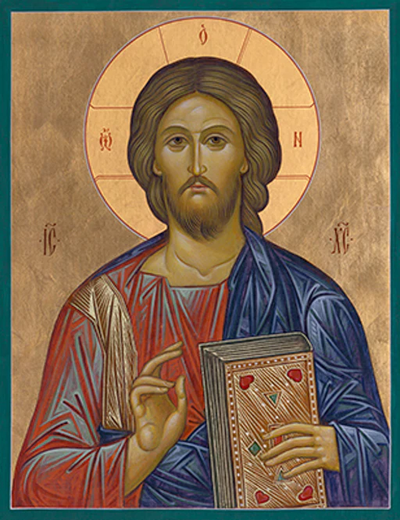
The Mystery of Our Faith
Eastern Churches as the Catholic Church and other Christian Churches believe in One God in the Holy Trinity - Father, Son, and Holy Spirit. In fact, the doctrine of the Trinity professed by all Christians today was hammered out in the Christian East over the course of four centuries.
In response to fierce debates over how the Father, Son, and the Holy Spirit could all be called one God, the Church held two Ecumenical Councils first in Nicaea, then in Constantinople. Together, these Councils worked out the Church's understanding of God as a Trinity of Persons. It is also from these Councils that we get the Creed we pray every Sandy.
Creation
At the very beginning of the Nicene Creed we say, " I believe in one God, the Father Almighty, Creator of heaven and earth..."
As Christians we believe that God created "all things visible and invisible” and gave to His creation a proper order. Through His creation, God reveals Himself to us because He Himself is "the Lord, the Creator of Life". All of creation speaks in some way of God's truth, goodness, and beauty.
This is particularly true of man, whom God created in His image and likeness as male and female, revealing that we are made for friendship with Him. In addition, He gave mankind dominion and custody over all creation.
The Fall of Man
Christ came into the world "for us mean and for our salvation."
Man was created by God in a state of original innocence and place in the garden of Paradise, where he enjoyed a special relationship with God and the rest of creation.
But man disobeyed God's only command: "You are free to eat from any of the trees of the garden except the tree of the knowledge of good and evil. From that tree you shall not eat; when you eat from it you shall die" (Genesis 2:16-17).
Because they distrusted their relationship with God and sought instant gratification, the first man and woman disobeyed God's command and were cast out of the Garden of Eden. This first sin has infected all of subsequent mankind with the sickness of sin.
Sin
In its original Greek, "sin" means simply "missing the mark," like an archer missing his target. We often think of sin as the violation of a law that is external to us - imposed on us arbitrarily by a God who is remote from us. But God is not remote from us. He is closer to us than we are to ourselves, and He knows the innermost yearnings of our hearts. He created us for Himself. Sin is, therefore, always connected with death - a separation from God.
Human Suffering
In one form or another we encounter suffering every day of our life. Suffering always brings many why questions. It forces us to look for the answers. God is not the Author of Suffering. He does not want us to suffer. Suffering, aging, and death entered human history with sin. Catholic tradition, following the teaching of St. Paul, teaches us that all suffering is a participation in the suffering of Christ on His Cross. If we unite our suffering with that of Christ, it can have a redemptive and salvific meaning. Suffering is meant not only to help us enter into Christ's passion, but also to strip us of attachment to all that is not God. God doesn't want just part of us, but all of us.
So often we allow our passions and desires to fixate on the things of this world, even the good things of this world. But, as the Byzantine Liturgy reminds us, we are called to "set aside all earthly cares" so that we can be more fully attached to God and His love for us. The ultimate answer to all human suffering can be found in the person of Jesus Christ.
We can consider suffering like a tool that is used to conform us to the image of Christ. With God as the sculptor, we are formed into something beautiful though the process itself may include smoothing, shaping, and purification.
The Prophets
The prophets prepared for the coming of Christ in two ways. Morally, the discerned God's plan in their contemporary situations, called people to obey God's will, and predicted the consequences for obedience and rebellion. They also made remarkable predications which were fulfilled in the events of the life, death and resurrection of Jesus Christ.
The Incarnation
The Gospel of John states that "the Word was made flesh and dwelt among us" (John 1:14), and we profess in the Creed, "For us men and for our salvation he [Jesus] came down from heaven, and by the Holy Spirit was incarnate of the Virgin Mary and became man."
Jesus Christ
Every Sunday, as we recite the Creed at the Divine Liturgy, we confess, "I believe in one Lord Jesus Christ, the only-begotten Son of God, born of the Father before all ages."
As Catholics we believe that Jesus is the only-begotten Son of God, consubstantial with the Father, and therefore the true God. We further profess that, at a specific point in history, "the Word was made flesh and dwelt among us" (John 1:14) for our salvation. Jesus is, therefore, fully God and fully man. He is the fullness of God's self-revelation to us.
Theosis
One of the central themes of Byzantine Eastern spirituality is the theme of "theosis" (divinization) - the process of transformation through which we become more and more like God.
Through the reception of the Sacraments/Mysteries, various ascetic practices, and with the aid of an experienced spiritual father or mother, we are purified of our disordered passions that keep us tied to this world and impede our union with God.
This process of purification leads us eventually to "theosis," a complete unity between the individual soul and God whereby we contemplate Him without concepts of images.
Mary / Theotokos (Eastern use) Meaning: The one who gave birth to God.
Doctrine: This doctrine asserts that the one person conceived and carried in Mary's womb (Christ) was, from the moment of conception, fully and truly both God and man.
Council of Ephesus: The doctrine was officially proclaimed.
Miracles
Throughout his public ministry Jesus performed many "signs and wonders" to demonstrate for us that He is, in fact, truly God even while being truly man. The first of these miracles - performed at the intercession of Jesus' mother, Mary - is when Jesus change water into wine at the wedding feast in Cana (cf. John 2:1-11).
That first miracle inaugurated a stream of miracles that ranged from healing sick, cleansing lepers, multiplying food, commanding the weather, and even raising the dead! Many of these miracles were prophesied as the marks of the Messiah.
But the greatest miracle of all is the one that is most difficult to see - Jesus' power to forgive sins. In fact, the many miraculous healing that Jesus performed were often mean to be a physical sign of the spiritual healing that He brought through the forgiveness of sins (cf. Luke 5:17-26). The physical healings Jesus performs (blind, deaf, mute, leprous, paralyzed, and dead) all point a deeper spiritual illness that needs to be healed. These maladies - and especially demonic possession - all point to the power of sin.
Parables & the Teaching of Jesus
The point of the parables is to stimulate conversion - to think, see, hear, and feel differently. Parables are almost always about the Kingdom: how is starts small, includes the mystery of good and evil, and will be fully revealed only at the second coming, for which we must always be vigilant.
Some of Jesus's most popular parables are the parable of the Good Samaritan (Luke 10:30-37), the parable of the Sower (Matt 13.3-23; Mark 4:1-20), the parables of the Lost Sheep (Matt 18:12-14); Luke 15:3-7), and the parable of the Prodigal Son (Luke 15:1-32).
Each one of Jesus's parables deserves to be prayed over for hours.
The Resurrection
In the Creed we profess that Christ "rose again on the third day according to the Scriptures." The bodily resurrection of Jesus is attested to by many eyewitnesses (1 Corinthians 15). Having passed through death as a sacrifice for us, Jesus rose from the dead with new life - no longer threatened by death. This new life is shared with us in Baptism and lived out by choosing to "walk in newness of life" (Romans 6:4) in imitation of Christ. We look forward to experiencing that new life completely: I expect the Resurrection of the dead and the life of the world to come.
The Church
The Fathers of the Church referred to the Church as the "communion of the Holy Spirit." We are the fellowship of believers, built up by God, made His children, called to be His people, and joined to Him through this community of believers. As the Body of Christ, the continuation of His physical presence on earth, the Church is called to carry on the mission of Jesus to proclaim the Good News of our salvation, and to witness to God's love for mankind. All members of the Church, laity and clergy alike, are called, therefore, to be evangelists - to carry God's saving message to others.
The Last Things
The Catechism tells us that "The Last Judgement will come when Christ returns in glory. Only the Father knows the day and the hour; only he determines the moment of its coming. Then through his Son Jesus Christ he will pronounce the final word on all history. We shall know the ultimate meaning of the whole work of creation and of the entire economy of salvation and understand the marvellous ways by which his Providence led everything towards its final end." The last four things we will experience are death, judgement, and, depending on our particular judgement, damnation to hell or inheritance of the kingdom.
The Holy Mysteries
The Seven Holy Mysteries continue God's saving plan to "bring everything together under Christ" (cf. Ephesians 1:9-10). Each one of these Mysteries, therefore, makes that saving action present to us here and now (cf. Colossians 1:27).
Baptism
Baptism initiates us into Christ's Kingdom, making us heirs to that Kingdom. Through Baptism we die to sin and rise to life in Christ (Galatians 3:27), are reborn of water and spirit (John 3:5-6), cleansed of sin (Acts 22:16, and enlightened by the gift of faith (Acts 8:37).
Chrismation
Chrismation immediately follows Baptism and seals us heirs of the Kingdom, giving us "the gift of the Holy Spirit," which helps us live lives worthy of the Kingdom (cf. Hebrews 6:2; Acts 8:14-17; 19:6).
Eucharist
Christ nourishes us with His Body and Blood, helping us to mature in His image and grow in His likeness (John 6:51-58; Luke 22:19-20; Mark 14:22-25; Matthew 26:26-29).
Unlike the Roman tradition, the Byzantine tradition does not separate the three Mysteries of Initiation, but celebrates them simultaneously, whether the candidate is an infant or an adult.
You may approach for Holy Communion if:
You are a member of a Unity Church
You made sacramental confession at least during Easter of Christmas this past year
You attend Mass or the Divine Liturgy regularly
Your lifestyle is consistent with the teaching of the Holy Church
You have kept the liturgical fast - at least one hours with no food and drink prior to Divine Liturgy - water and medicine does not break the fast
You have been in church from the beginning or at least heard the Gospel
If you are unable to receive Communion, you are still welcome to approach the priest for a blessing (please indicate that you want to receive the blessing only when you approach).
If one publicly remains in a grave sin (e.g. living in adultery, promoting abortion) that person should not approach for Communion until he/she is reconciled to God.
In the Eastern tradition, Holy Communion is received under the forms of bread and wine mixed together and administered on a spoon. As you approach the priest:
Remain standing
Please tell him your name so that the prayer can be personalized for you
The priest will use a spoon to retrieve Holy Communion from the chalice
Tilt your head back, widely open your mouth, and close your lips upon the spoon so as not to waste a single drop or piece of His precious Body and Blood
No response is required for the prayer
Consume Holy Communion and return to your pew and engage in silent prayer until all communicants have received Holy Communion
Confessions & Repentance
Proverbs 24:16 tells us that even virtuous people fall seven times. But Christ has given us the
Mystery of Repentance to make His mercy and forgiveness always available (cf. John 20:21-23; James 5:14-17).
Jesus' sacrifice on the Cross is the only source of forgiveness for sin. Jesus entrusted that ministry of forgiveness to the Apostles (Matthew 18:18; John 20:22-23). Jesus offers forgiveness of sin, but we need to admit we are sinners in order to claim it (1 Timothy 1:15). Public confession of sins and reconciliation of sinners have been practiced in one form or another since the first days of the Church (James 5:16; 1 Corinthians 2:1-11). the sacrament of Repentance is often called a "second baptism."
Holy Anointing or Anointing of the Sick
The Mystery of Holy Anointing was given to us so that our suffering in this life can be put in its proper perspective - the mystery of Christ's victory over death (cf. James 5:14-15; Mark 6:13). The East has always offered the Mystery of Holy Anointing to any person suffering from illness of body, mind, or spirit. The Sacrament not only increases sanctifying grace in the soul of the sick person, but also delivers him from the remnants of sin.
Mysteries of Service
Marriage
Marriage is a natural relationship instituted by God from the beginning. But in Christ we see its deeper mystery as a revelation of Christ's relationship to the Church, and as a living icon of the Holy Trinity (Gensis 2:24; Matthew 19:1-12; Ephesians 5:21-33). The Bride and Groom are crowned to symbolize their God-given dominion (Genesis 1:28) over the "domestic Church" of their home and to challenge them to a sacrificial love that imitates Christ's love for His Church (Ephesians 5:25-32). Such love is always free, total, faithful, and fruitful.
Holy Orders
Christ established the priesthood so that the fruits of His death and Resurrection, made available through the Mysteries, would be made available to all mankind throughout the ages (Lk 22:19; Mt. 28:18; John 20:22-23).
The East has maintained the ancient practice of ordaining married men to the priesthood, choosing to reserve the call to celibacy "for the sake of the kingdom" for the monastic life. Bishops are celibate.
By the laying on of the Bishop's hands, a man receives the Sacrament of Holy Orders. By the grace of this Sacrament, a priest carries on Christ's saving work, becoming more fully a steward of God's mysteries "rightly dividing the word of truth." It is the priest’s duty to administer the Sacraments, preach the Gospel, and be a source of spiritual teaching and consolation for this flock.