The Congregation of Eastern Churches for Unity
S
"
about us
The mandate and mission of the Congregation is to seek unity among the Eastern Churches in particular and to work on unity among the other world Churches. Altimetry, the main mission of the Congregation is to promote for the Unity among Christians.
One of its missions is to be in contact with the Eastern Churches and build bridges for the sake of assisting their development, protecting their rights and to help alongside the liturgical, disciplinary and spiritual patrimony of the Eastern Rite |Churches, and to protect the heritage of the various Eastern Christian traditions.
The Congregation is made up of a Cardinal designated by the Pontiff General, Primate. He is assisted by appointed Bishops and Priests. Members by right are the Patriarchs and the Major Archbishops of the Eastern Churches.
The Congregation is responsible for all matters pertaining to the Eastern Churches, relations between the Western and Eastern Churches, and all issues arising from the implementation of the code of canons of the Eastern Churches and the production of liturgical texts. These faculties are exercised without derogating from the traditional jurisdictional rights of Patriarchs and their Holy Synods in such matters.
unity church
The Unity Church is an independent Church which aims the union of all the Churches. It is the only Church where the Catholic, Orthodox, and Protestant clergy con-celebrate together and commune in the Body and Blood of Christ in accordance with the data of its constitutional rules and its Code of Canon Law.
The Church of Unity is composed of three branches: the Catholic Churches of Unity, the Orthodox Churches of Unity, and the Protestant Churches of Unity.
The Church of Unity is the institution that unites all Catholic, Orthodox, and Protestant faithful—that is, all Christians in communion with the Pope of the Church of Unity. It is also an institution and a clergy organized hierarchically. It is the Church whose vocation is to unite all Christians with one another, as well as with non-Christian believers.
The theology of the Church of Unity is founded on the Nicene Creed and is distinguished by the sacraments, the most important of which is the Eucharist, which is the celebration of Unity concelebrated by the clergy of the Catholic, Orthodox, and Protestant Churches of Unity. The Church of Unity thus conceives of itself as a union of Catholic, Orthodox, and Protestant Churches in perfect communion with the Pope of the Church of Unity, whose apostolic succession derives directly from Saint Peter the Apostle.
The Church of Unity has several Apostolic Sees, but its synods, assemblies of bishops, dioceses, and local parishes ensure the administration and life of the Church on every continent. The Church of Unity is an apostolic Church founded by Christ: “You are Peter, and on this rock, I will build my church” (Matthew 16:13-23).
The Church of Unity believes in one eternal God in three hypostases, or three persons, who together form the Holy Trinity: the Father, the Son, and the Holy Spirit. Although fundamentally distinct, these three persons are equal and share in the same divine essence. Government of the Church of Unity since July 23, 2024: Pope John Peter I, successor of Saint Peter, is the Primate, the first among bishops and head of the Catholic, Orthodox, and Protestant Churches that have joined Unity.
His mission is to unite all the Churches. The international leadership of the Church of Unity is assumed by its Pope. The hierarchy of the Catholic Church is composed of ministers, also called clergy, whose role is to oversee the Church and who comprise three orders: deacons, priests, and bishops. The deacons and priests of the Church of Unity carry out their priesthoods in communion with the Pope of the Church of Unity and their bishop.
The other faithful of the Church who are not ordained are called lay people or faithful and include all the baptized and those who are not yet baptized. In specific cases, some baptized individuals make a particular commitment to the service of God, the Church, and the world through vows of poverty, chastity, and obedience, notably within religious orders. A distinction is made between ordained ministers, lay baptized individuals, and consecrated persons. Consecrated persons may be either ordained or lay.
The See of the Unity Church is represented by Apostolic Nuncios and plays a mediating role in certain conflicts. The canon law of the Church of Unity is the body of laws and regulations adopted by the legislative section of the Supreme Tribunal and accepted by the founding Pope, John Peter I, governing all the Churches and all the faithful. Voting is the legitimate method of appointment in the Church of Unity. The elective system in the Church of Unity aims to select the best candidates. Therefore, the Church of Unity regularly organizes the election of the future Pope from among its Cardinals.
The Cardinal elected by two-thirds of the Cardinals and appointed Coadjutor by the Pope of the Church of Unity becomes the future Pope of that Church. The Church of Unity has more Cardinals than the Roman Catholic Church. The known or public Cardinals of the Church of Unity come from the Catholic, Orthodox, and Protestant Churches of Unity. The "in pectore" or secret Cardinals of the Church of Unity come from the Roman Catholic and Orthodox Churches that have not yet joined the Unity Church.
The legitimacy of the election of the Pope of the Church of Unity is therefore different from the papal elections adopted by the Roman Catholic, Coptic, and Palmarian Churches. The jurisdictional competence of these latter Churches extends to each of them. The jurisdictional competence of the Church of Unity extends to all Churches, hence the hope of seeing the realization of union among all the Churches. The jurisdictional competence of these latter churches extends over each of them. The jurisdictional competence of the Unity Church extends over all the churches, hence the hope of seeing the realization of union among all the churches. The jurisdictional competence of these latter churches extends over each of them. The jurisdictional competence of the Unity Church extends over all the churches, hence the hope of seeing the realization of union among all the churches.
All Christians are invited to come together in a real partnership with His Holiness Pope Jean Pierre, Primate and with all the Churches who are presiding together the United Church Organisation.
The aim of the Unity Church is to remove the obstacles placed by the Church's division so that the Catholic, Orthodox and Protestant clergy, who have received the sacrament of priesthood on the basis of a true apostolic lineage, can sanctify together and receive the Body and Blood of Christ with one heart and one spirit as the apostles did. In the Unity Church, the Catholic remains Catholic, the Orthodox remains Orthodox, and the Protestant remains Protestant, noting that the Protestant priest who joins the Unity Church is ordained an evangelical deacon and a priest before participating in the Divine Liturgy with his brothers in the Catholic and Orthodox priesthood.
Enough with the nonsense, quarrels and careless words on social media networks that distance us from each other. The request of Christ, our Lord, God and Saviour, is that we be "one", which will be fulfilled according to the constitution and laws of the Unity Church.
The Unity Church consists of three branches:
1) The Catholic Church of Unity.
2) The Orthodox Church of Unity,
3) The Protestant Church of Unity.
The three above-mentioned Churches are no longer schismatic and their clergy celebrates the Eucharist and communion together in the Body and Blood of Christ. The canonical and constitutional institutions have allowed this communion indispensable to the true union between the Churches. The Protestant Churches are becoming more and more Apostolic: their pastors have requested and obtained the sacrament of the Order.
"The term ""unity"" comes from the Lord Himself who prayed for the unity of the believers."
Through history, Christians always tried to agree with each other, but the constitutional and legal rules of Churches sadly prevented them from doing so. The Unity Church has put an end to the many rules that divide the Christian people.
This diverse blend creates a unique spiritual community that affirms the unity of the churches in the face of all the challenges they face.
We believe in a fraternal Church, where each person is welcomed with love and respect, just as they are. It is in this spirit of family that we move forward, supporting one another on life's journey.
Pope John Peter I described the Church of Unity as follows: "The Unity Church instructs, forms, and prepares universal understanding among the Churches of God. Understanding cannot be achieved if fraternal love is lacking. Fraternal love cannot be achieved if respect is lacking. Since Unity is Christ in the Eucharist, the union of the clergy is paramount. Union requires equality of formation. Equality of formation requires serious formation. Serious formation requires time devoted to the Church. Falsehood, lies, hypocrisy, and cunning are incompatible with the qualities of those who work for the expansion of the Kingdom of God on earth. Let us remember the words of Jesus: 'Greater love has no one than this, that someone lay down his life for his friends' (John 15:13). Those who have believed they could use the Church to acquire power for financial gain have all publicly lost or secretly their clerical status... No schismatic can be born from the Unity Church. All those who refuse unity through obstinacy and fallacious pretence will be expelled from the Church."
leadership
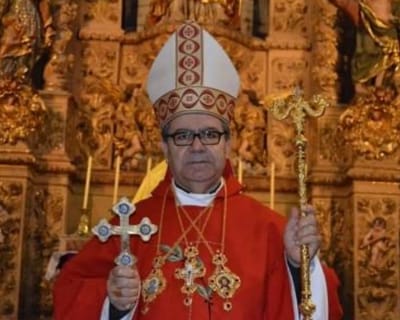

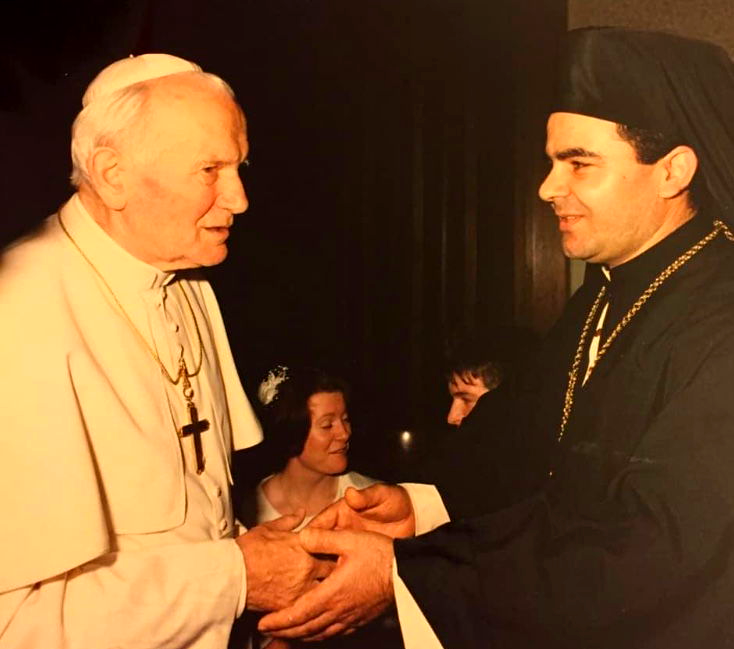
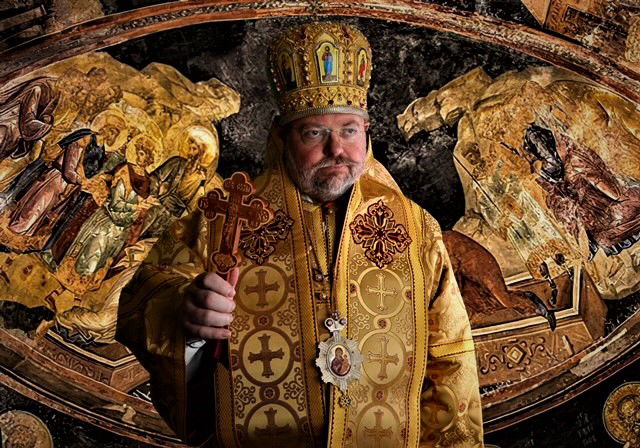
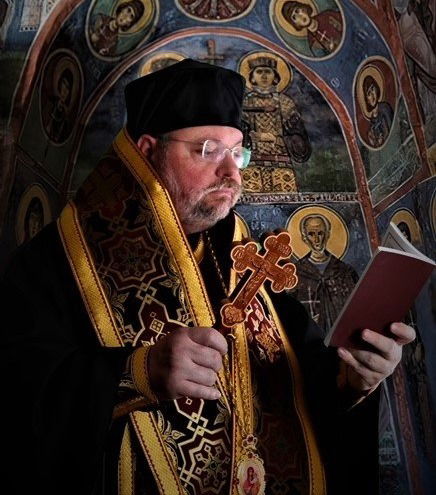
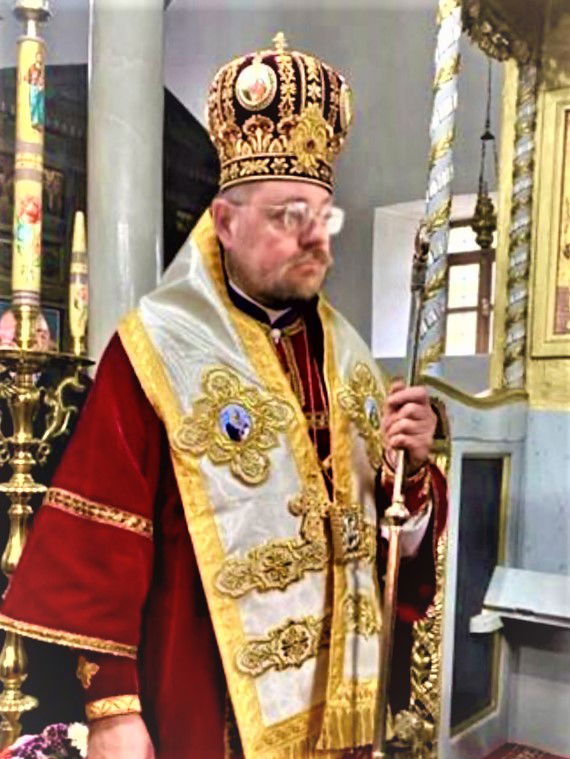
His Holiness Pope Jean Pierre I,
Primate of Unity Church
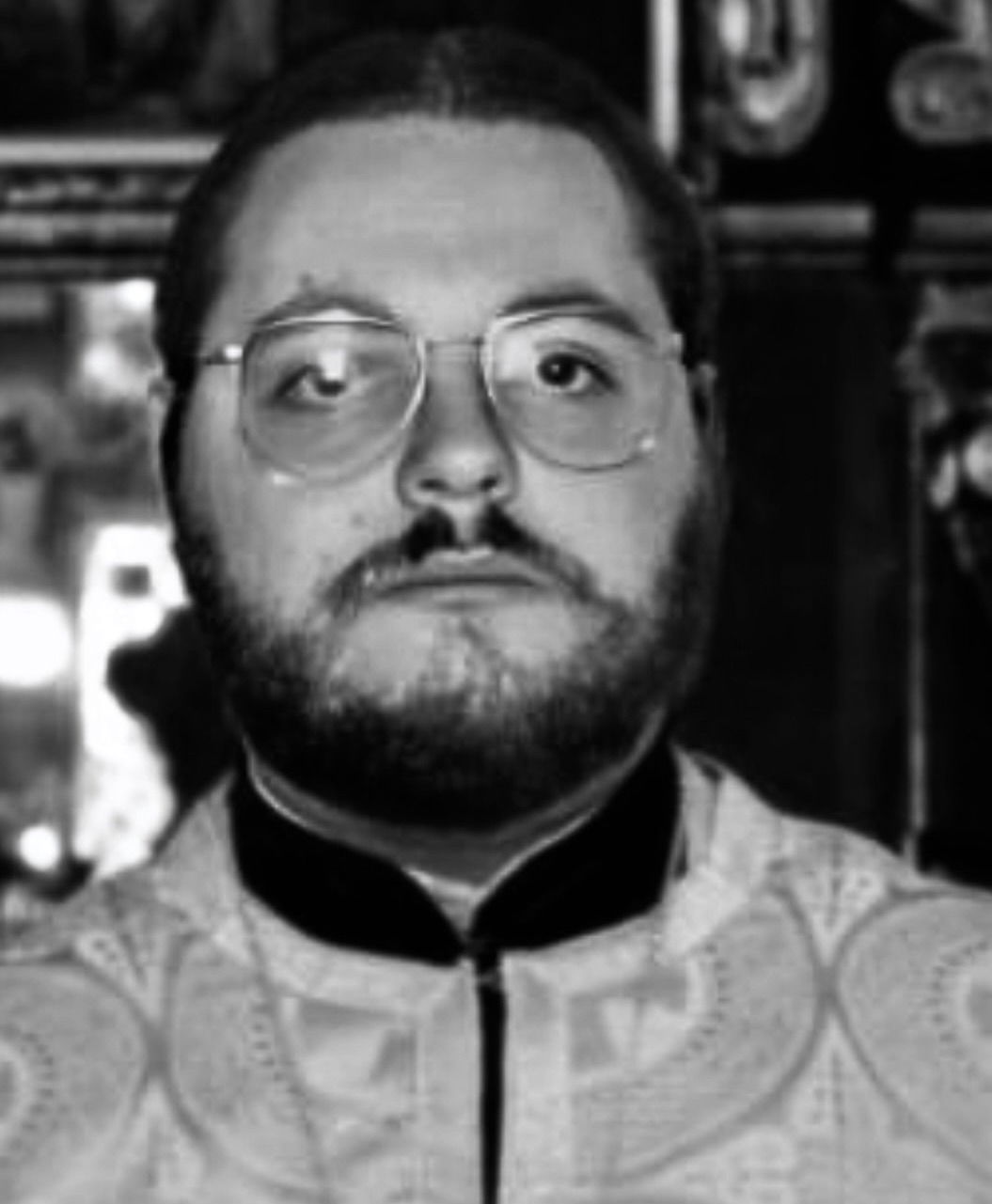
His Holiness Pope Jean Pierre I, was born in 1960. He is the brother of six boys and five girls. The northern town of Aydamoun , the birthplace of His Holiness, is the third most educated Lebanese town. In addition to the fact that it is a small Lebanon, it has many sects and religions, and it is a model of coexistence among all sects and sects.
His Holiness, completed his primary studies at the Eidmoun Public School and his complementary studies at the Marmoura Al-Qubayat School, Akkar, Lebanon, in the North. Then he joined the Latin Seminary in Beit Jala in occupied Palestine, where he completed his secondary studies, as well as the first year of philosophy. His Holiness entered the Jesuit University in Innsbruck, Austria, in 1980, where he completed his philosophical and theological studies. His Holiness holds a BA in philosophy and a BA in theology.
His Holiness entered the Faculty of Law in Bordeaux / France in 1992 and obtained a DEA degree at the Faculty of Law at the University of Perpignan, France, in 1998. He also completed his degree in Belgium and obtained a Bachelor of Laws degree in 2002. His Holiness completed his doctoral thesis on marriage and its abolition in Islamic doctrines. He translated several books from the Great Blog by Judge Sahnoun bin Saeed into French.
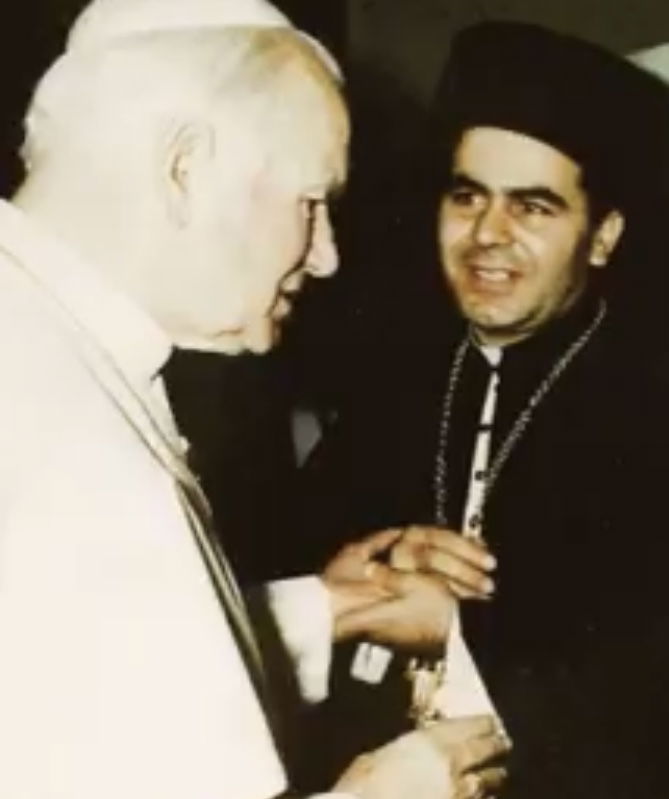
Pope Jean I, was ordained a priest in the Greek Catholic Church of Saints Peter and Paul on April 14, 1985, and an Archimandrite (senior among the priests) on April 9, 1988, by the laying on of the hand of the Most Merciful Bishop Elias Najma, the Greek Catholic Archbishop of Tripoli and North Lebanon. He served as a priest in the parishes of Shudra and Eidmon. He taught at the Freres School in Tripoli and was sanctified in the Latin rite of the brothers.
After completing his postgraduate studies in France and Belgium, His Holiness returned again to serve his parish, Shudra and Eidmon, and manage the St. Therese of the Child Jesus School in Shudra. He left his parish in Eidmon permanently on Easter Sunday 2015.
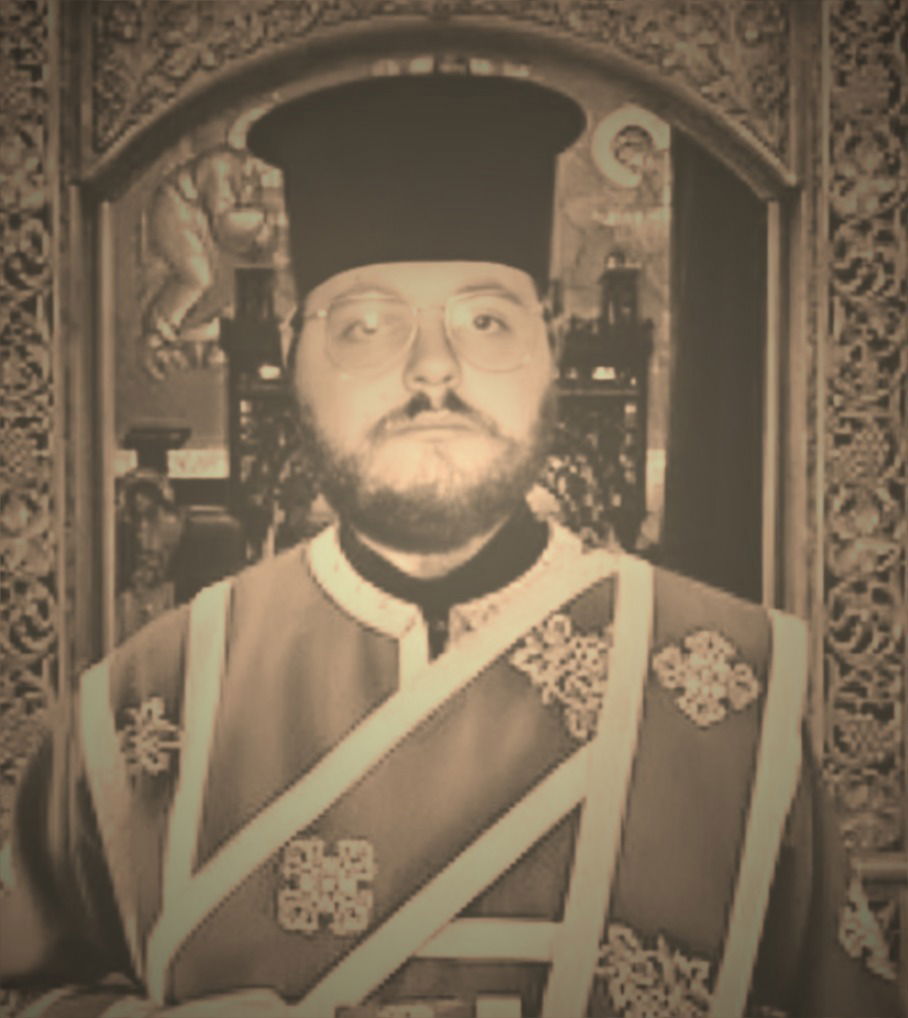
His Holiness was consecrated a bishop in Paris by the laying of the hand of His Holiness Patriarch Nicholas I, Patriarch of the Orthodox Church of the Nations, on May 21, 2015. As a result, he founded the Unity Church, which is an independent Church that combines the Catholic and Byzantine Orthodox ecclesiastical heritage. It has many churches all over the world, in addition to being the only Church that allows Catholic and Orthodox bishops and priests who belong to a valid apostolic succession have the right to actively participate in the Divine Liturgy with their bishops and priests, and to receive with them the holy mysteries with one heart and one spirit,
His Holiness was installed as Archbishop of Brussels and first president of the Supreme Court of the Unity Church on June 20, 2015. He was promoted to the rank of Metropolitan on September 14, 2017.
The Holy Synod of the Unity Church, composed of 42 bishops at the time, representing dioceses from various parts of the world, elected His Holiness, Patriarch on November 10, 2017, he chose the name Benjamin I. In July 2019, The Holy Synod elected His Holiness Pontiff General of Unity Church.
On August 14th and 15th in 2019, Pope Jean Pierre I, Primate drew up the Charter of the United Church and invited all the Heads of the Churches for its ratification.
On July 23rd 2024, the College of Cardinals elected His Holiness Pope and Primate of the Unity Church. His Holiness chose the name Jean Pierre I, Primate.
This election represents a huge step for the Church of Unity, as Pope John Peter becomes one of the five Popes currently serving in the world. Other Popes include His Holiness Pope Francis (Pope of the Catholic Church and Bishop of Rome), His Holiness Pope Tawadros II (Pope of the Copts and Archbishop of Alexandria), His Highness Apostolic Rutherford I, Pope of the Ruthenian Church, known as the Prince Bishop, and His Holiness Pope Peter III (Head of one of the churches in Spain).This highlights the fact that the title of Pope is not limited to the Roman Catholic Church and the Vatican State, because in fact, this title simply means "Father".
This diverse blend creates a unique spiritual community that affirms the unity of the churches in the face of all the challenges they face.
Through this papal election, the Unity Church demonstrates its commitment to promoting dialogue and cooperation among different Christian traditions. The new pope will play a crucial role in leading the church and promoting the message of unity and reconciliation.
The Role of the Pope in the Unity Church
As the newly elected Pope of the Unity Church, His Holiness Pope John Peter I will continue to provide spiritual leadership and guidance to the clergy and faithful, represent the Unity Church in interfaith dialogues and ecumenical initiatives to promote the unity of the world’s churches, and oversee the dissemination of its new constitution, constitutional norms, and canon law. The Importance of Multiple Popes. The presence of multiple popes in the Christian world may seem unusual to some, but it reflects the diversity and complexity of the Christian community worldwide. Each Pope represents a particular tradition or branch of Christianity, and his roles and responsibilities vary accordingly. As Pope John Peter I begins his term as head of the Church of Unity, many are eager to see how he will shape the future of the Church.
This is an exciting new chapter in the history of this unique religious movement. As the Unity Church continues to grow and evolve, Pope John Peter I’s leadership will undoubtedly play a crucial role in shaping its future and promoting a message of unity and reconciliation, first among all Christians and later with other faiths.
+++++
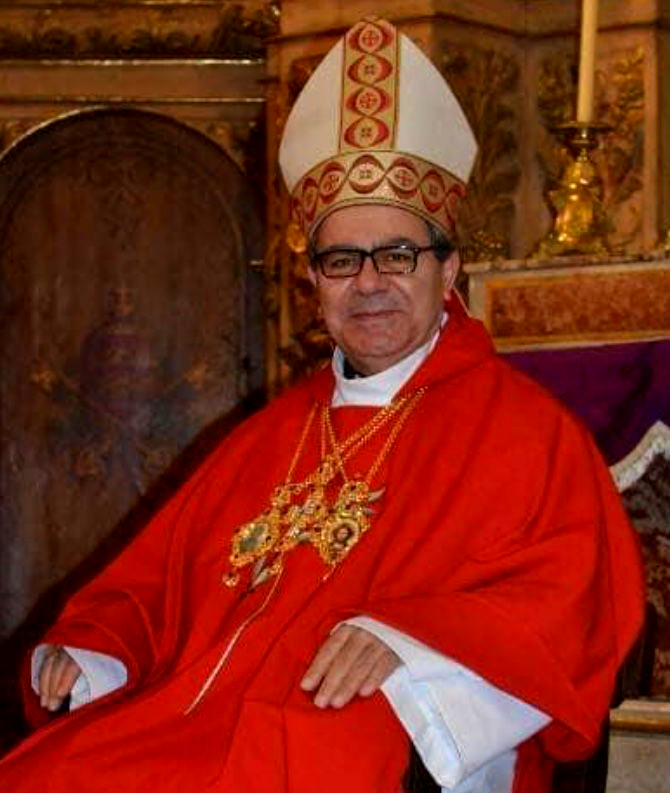
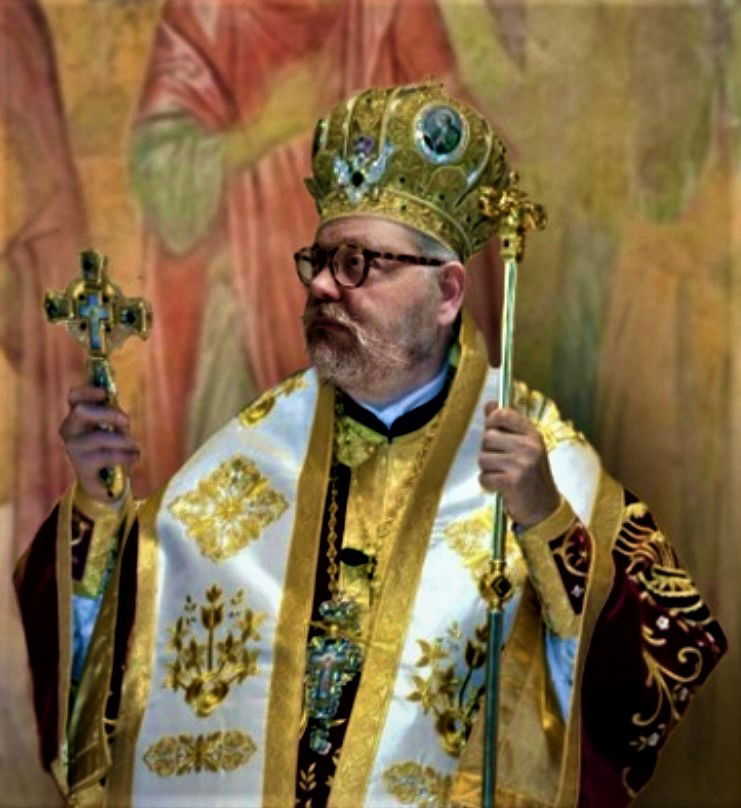
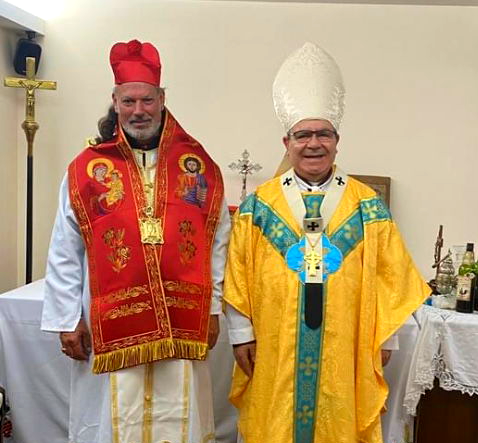
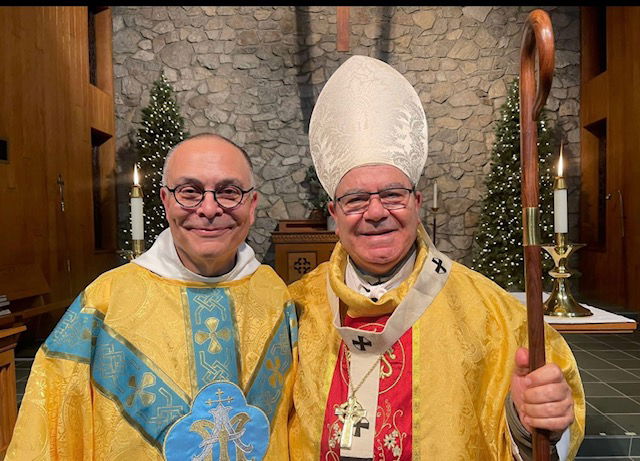
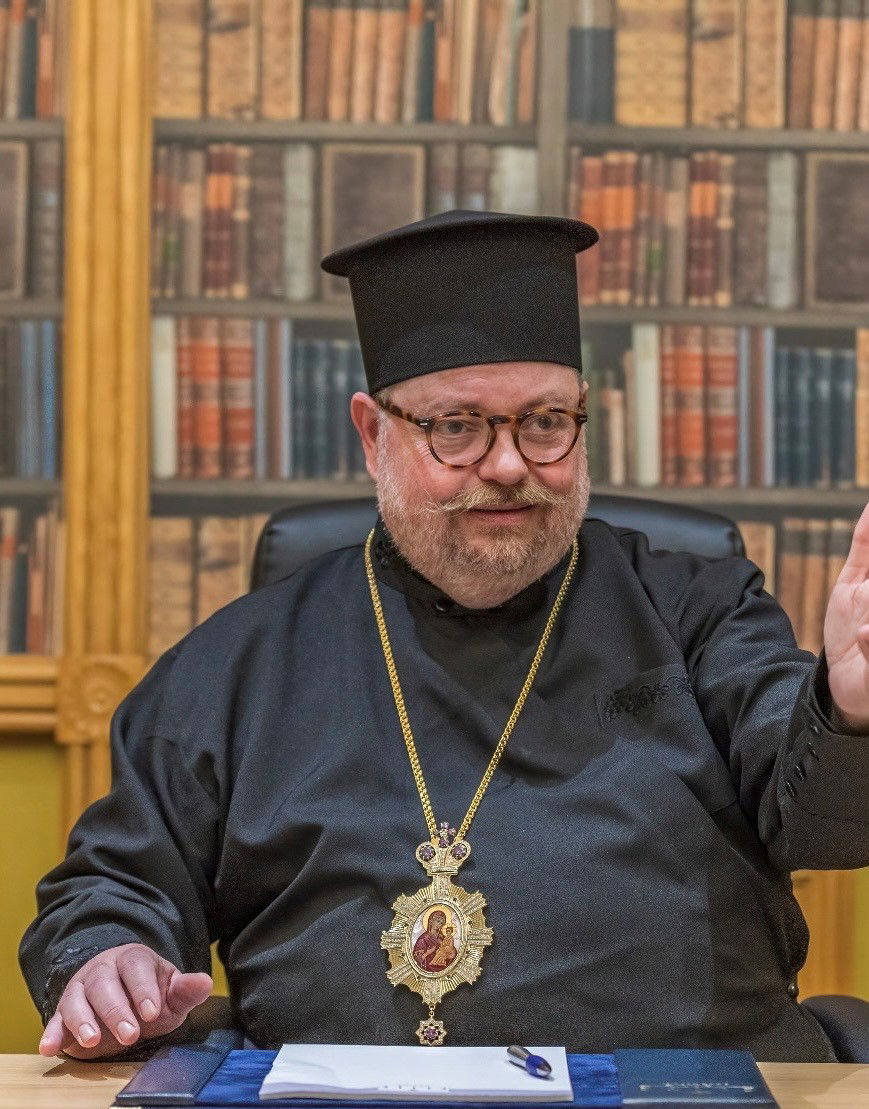
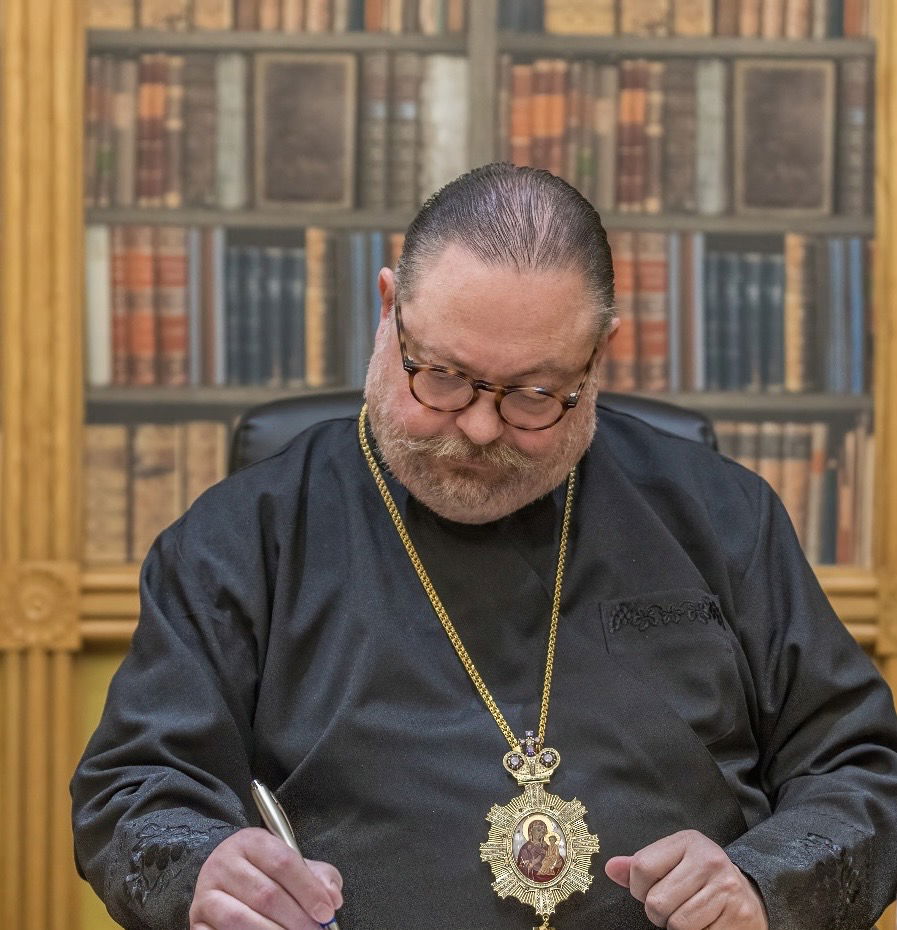
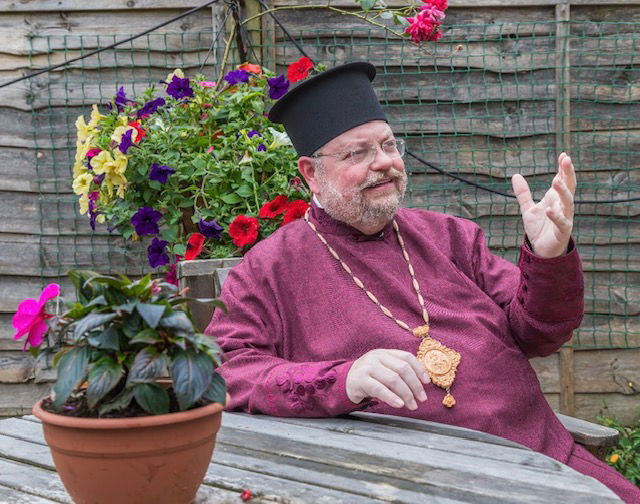
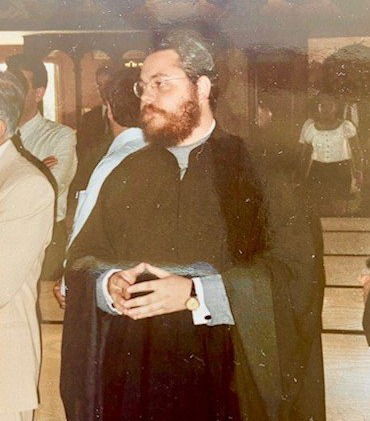
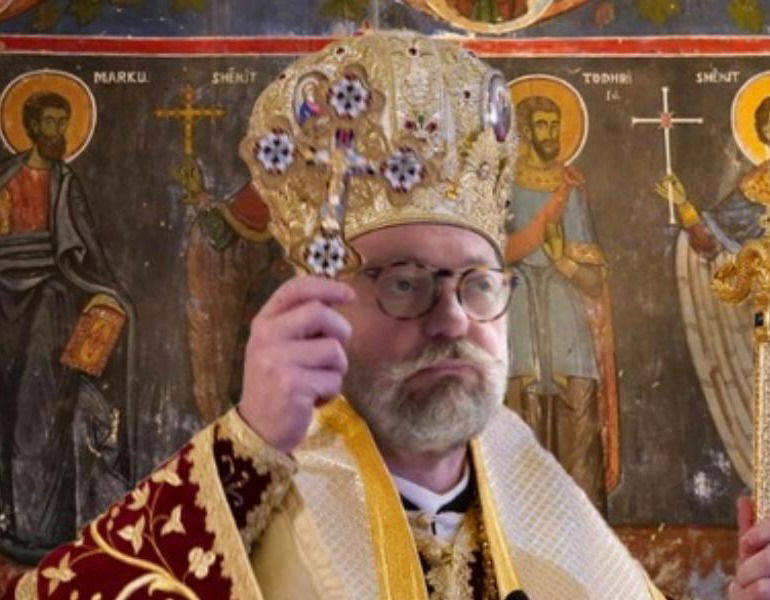
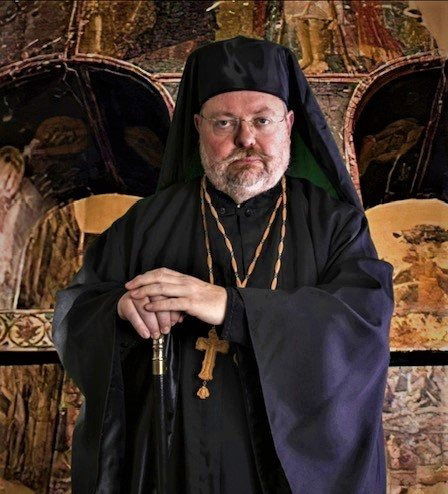
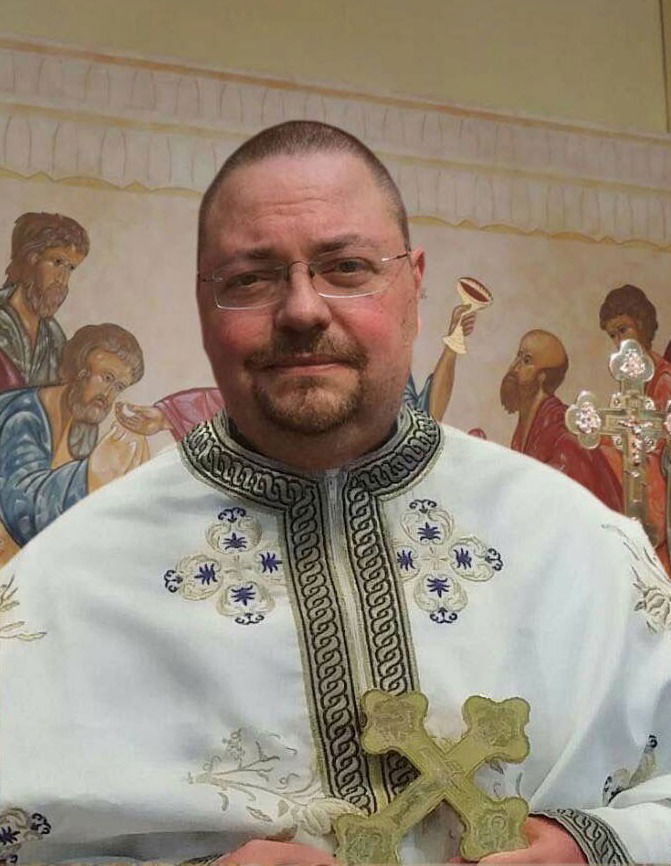
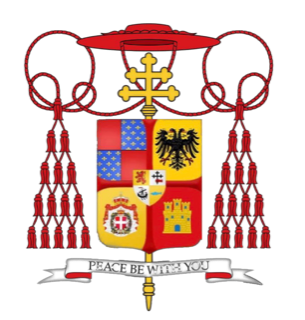
His Eminence Cardinal George
Primate of the United Kingdom
Head the Congregation of Eastern Churches for Unity
Pontifical Coadjutor to the Apostolic See
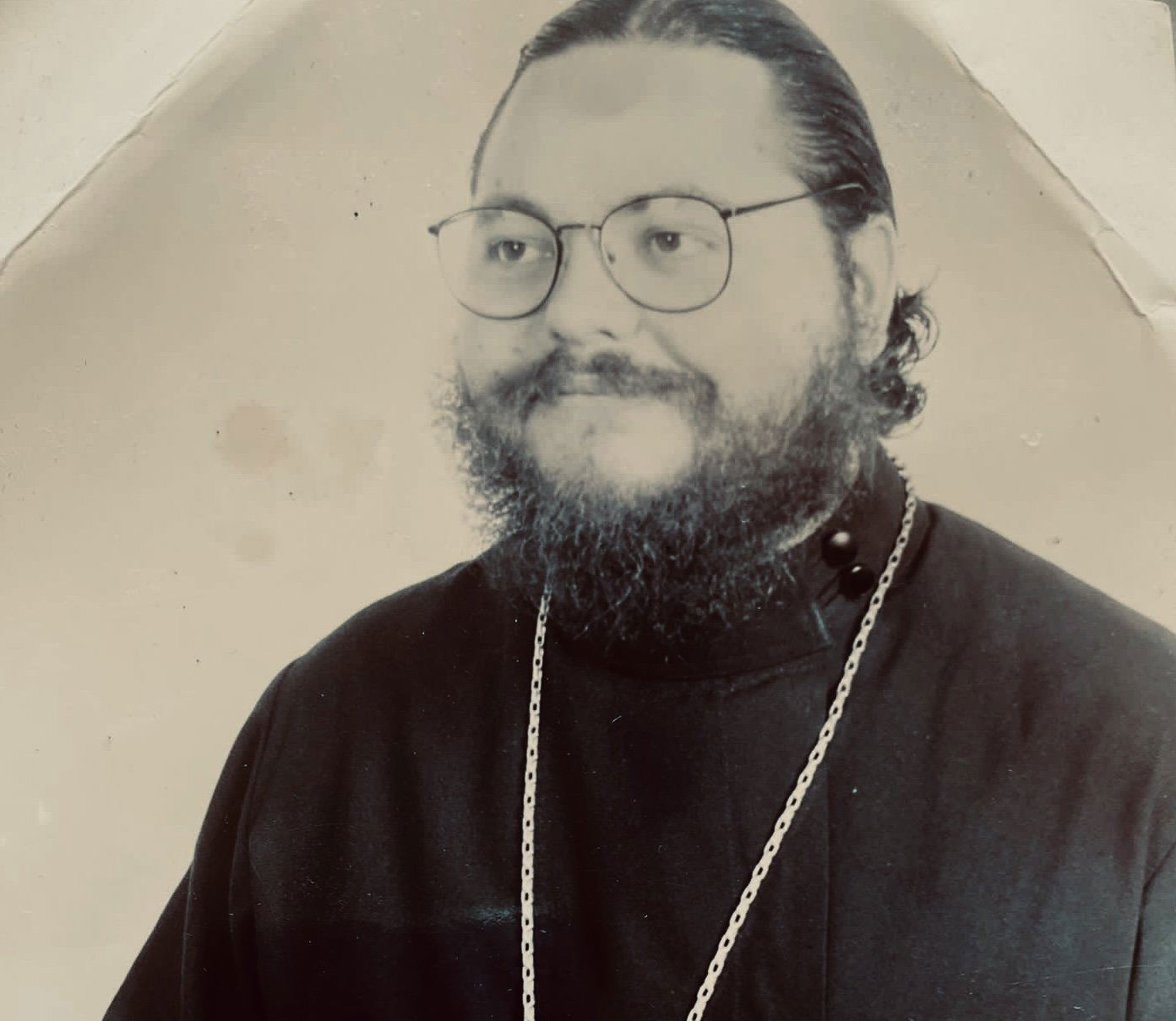
His Eminence was born in the Middle East in a Christian Family. From his youth, he was inclined to serve the Church. In the mid 80's, due to unstable political situation and civil wars in the region, he travelled to New York, USA to attend Saint Vladimir Orthodox Theological Seminary where he read Theology. He attained a MA Degree in Divinity; he also holds a MA Degree in Business Administration from Cornell University and a PHD in Eastern Theology as well.
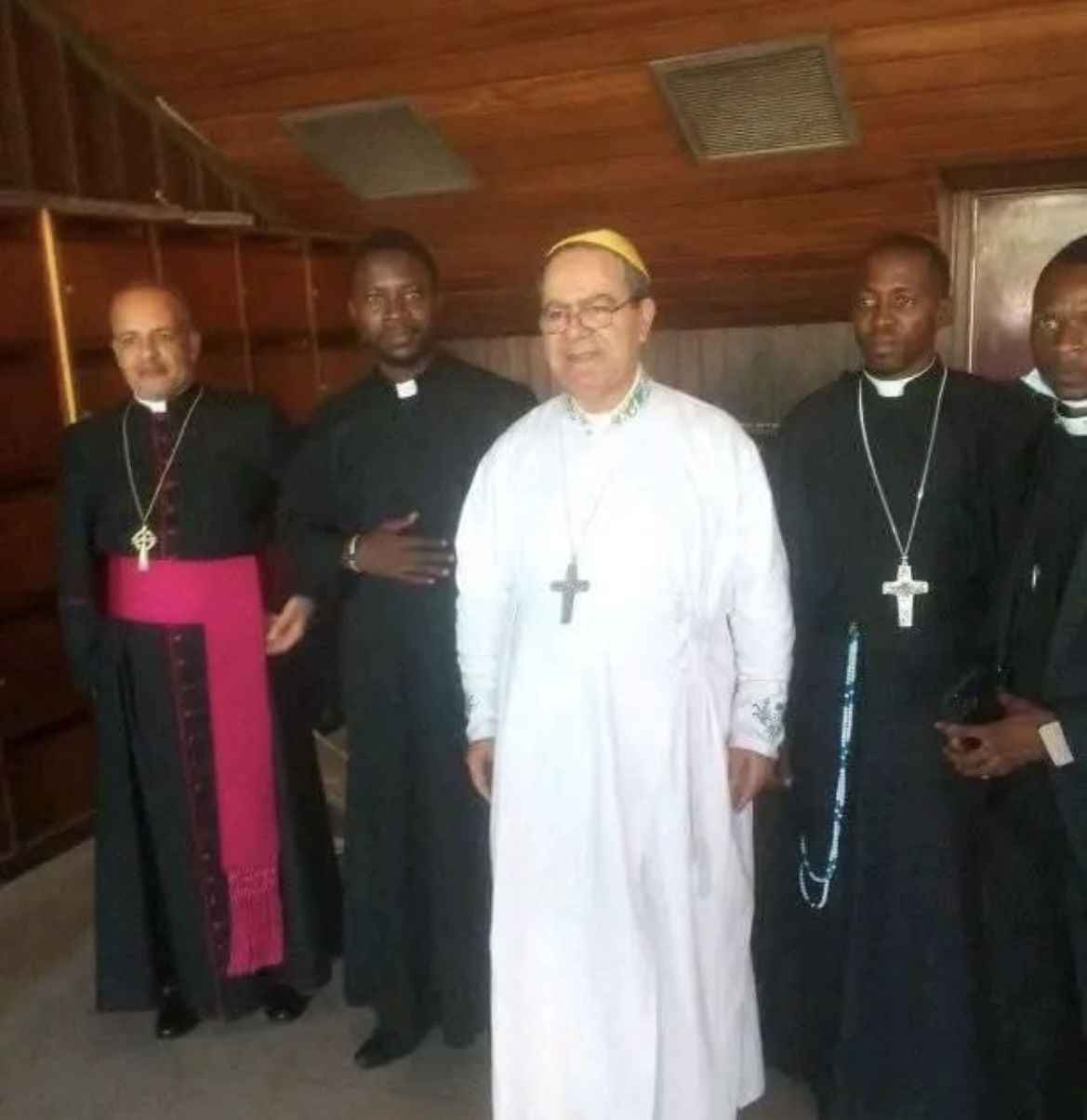
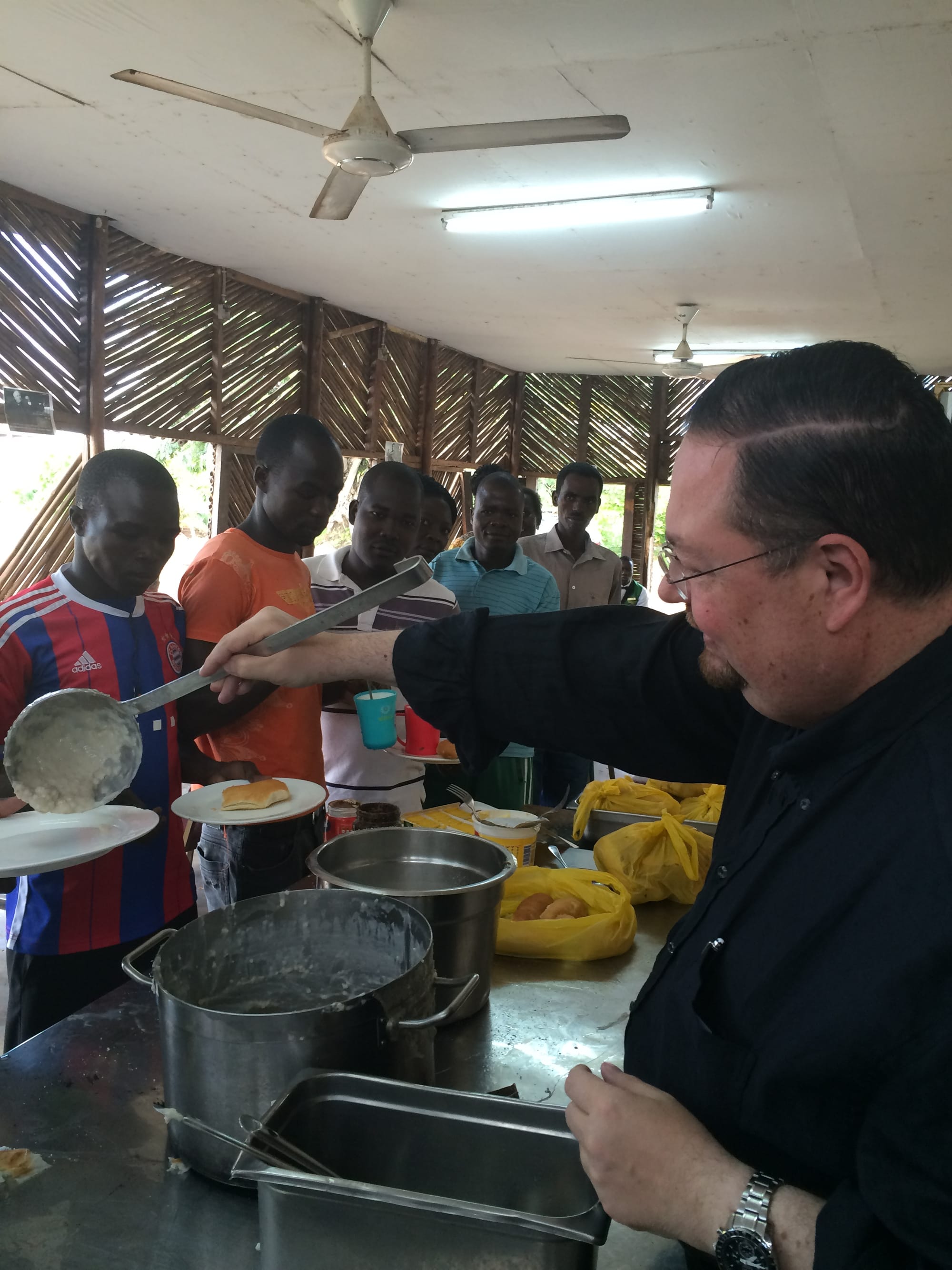
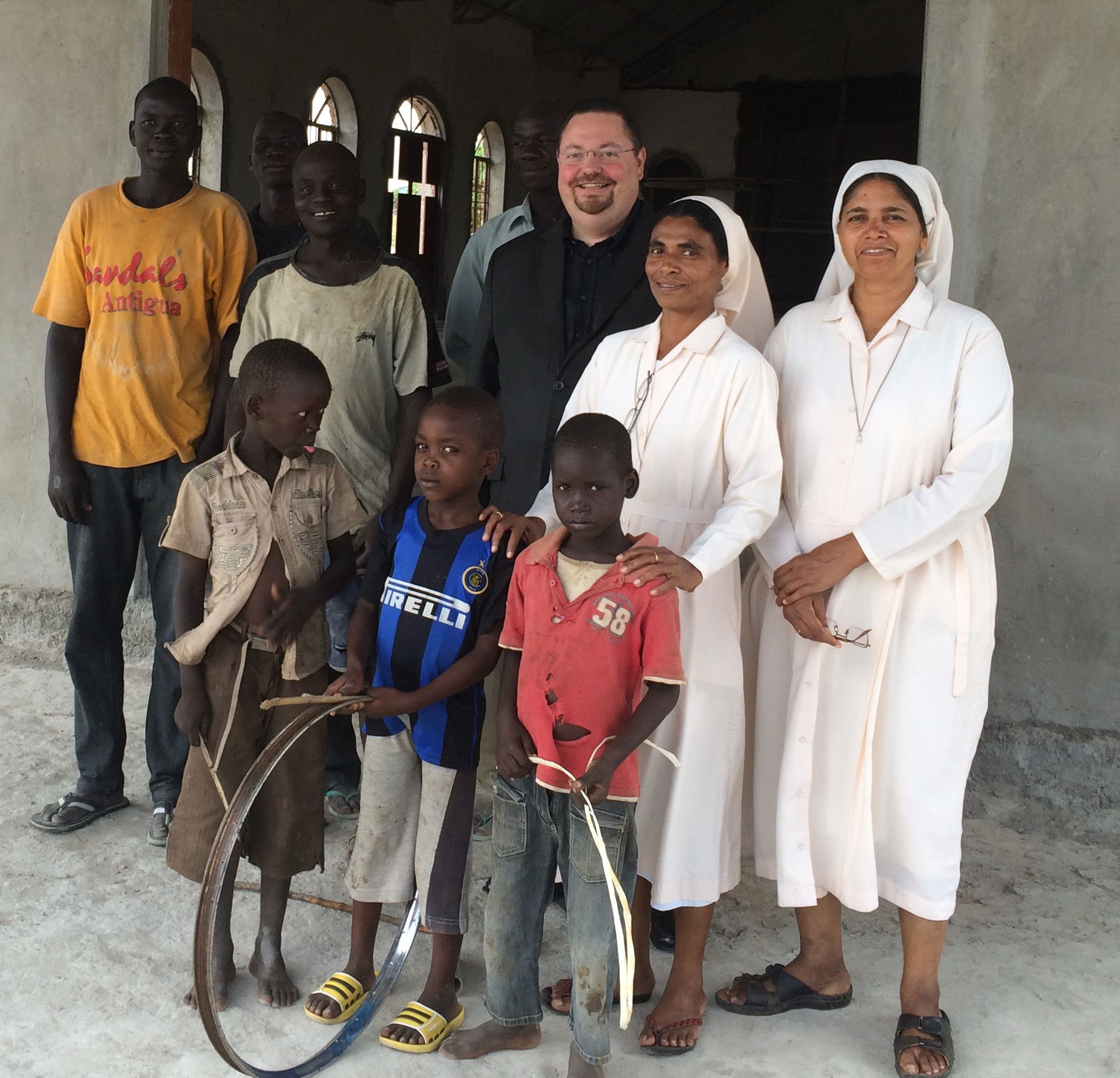
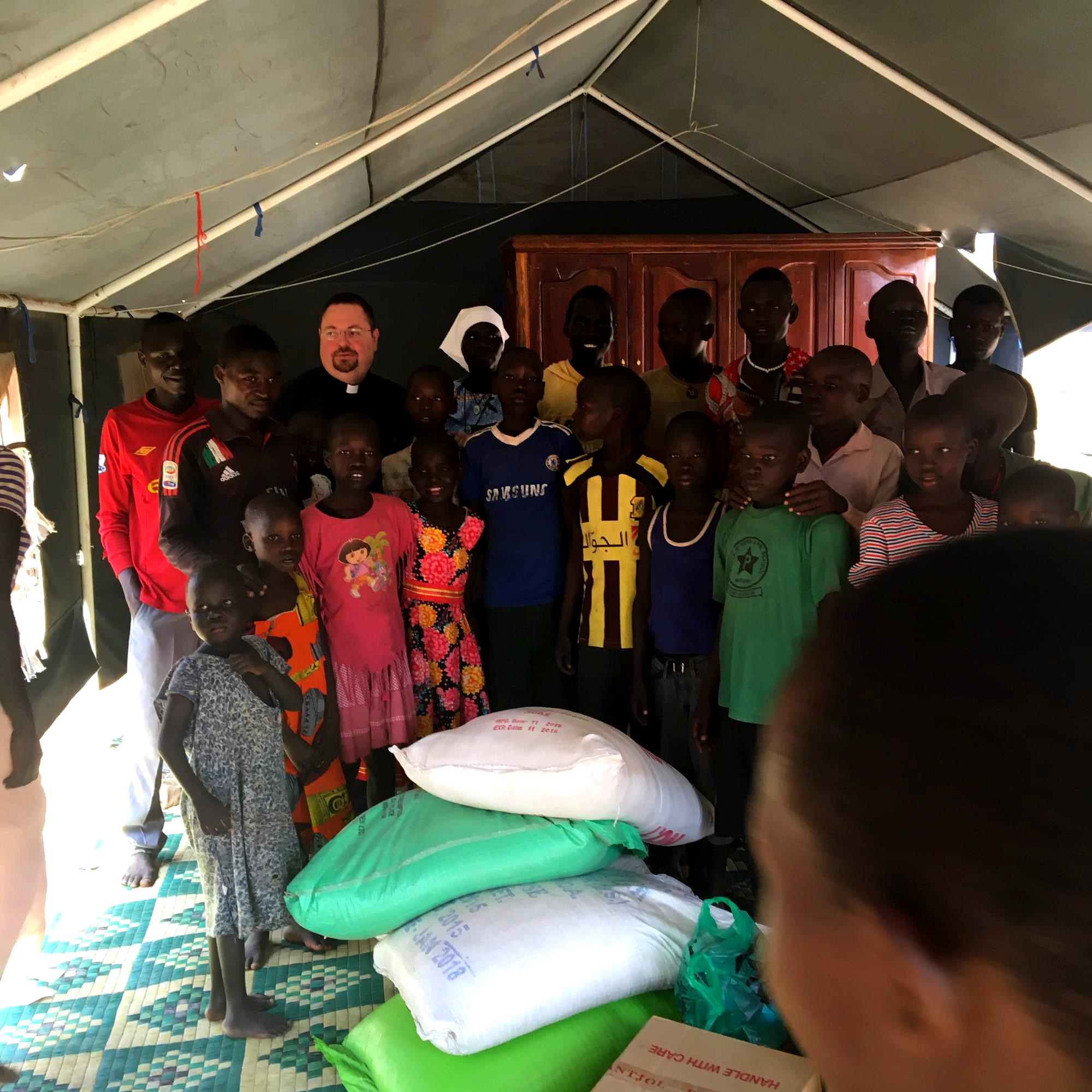
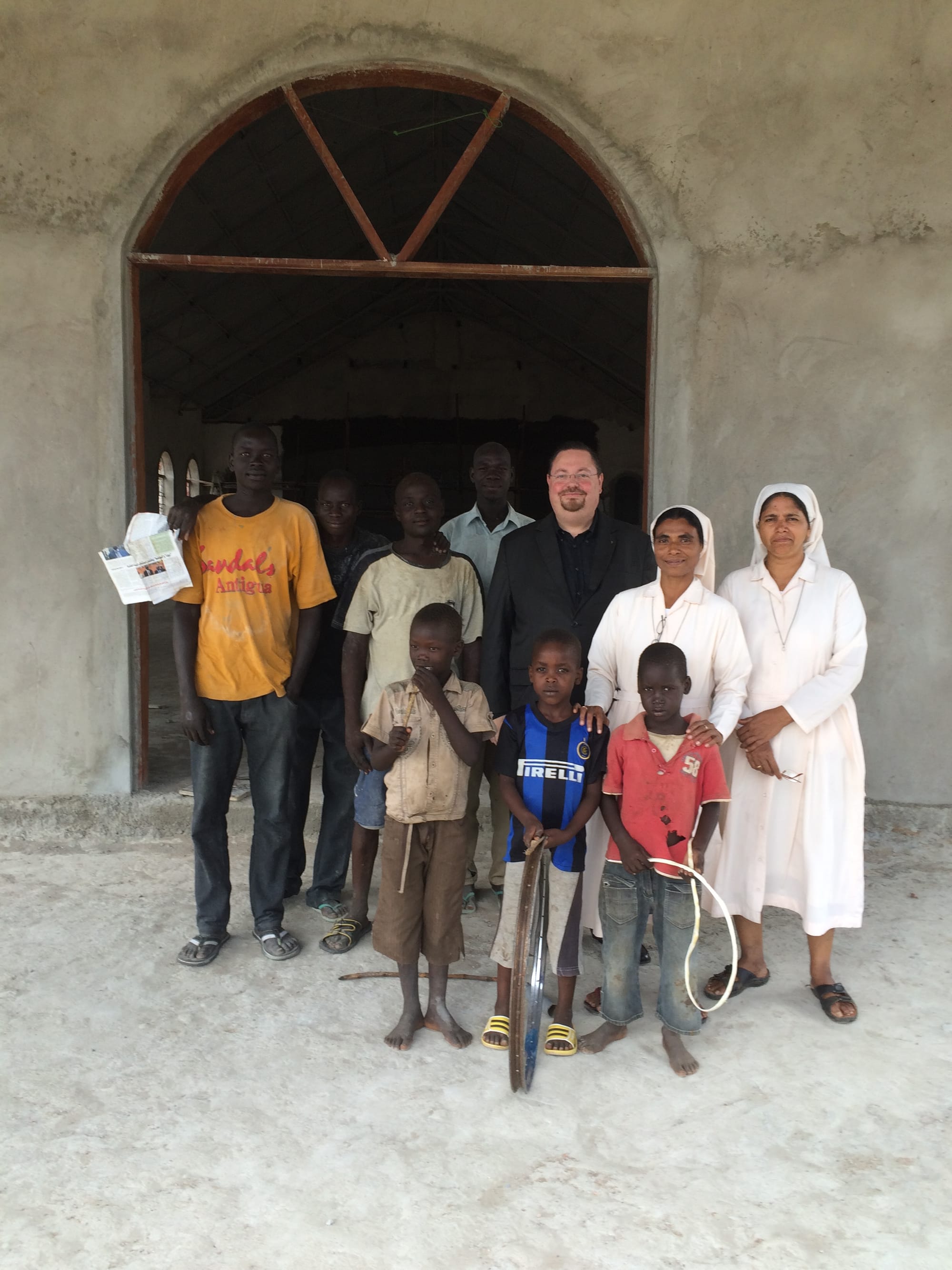
In June 1995 he was consecrated a Titular Bishop. In 1998, then Bishop George, he was asked to take on reinvigorating the missionary work in Eastern Africa. His mission was to create a strong Christian community mission work and education system in that part of the world.
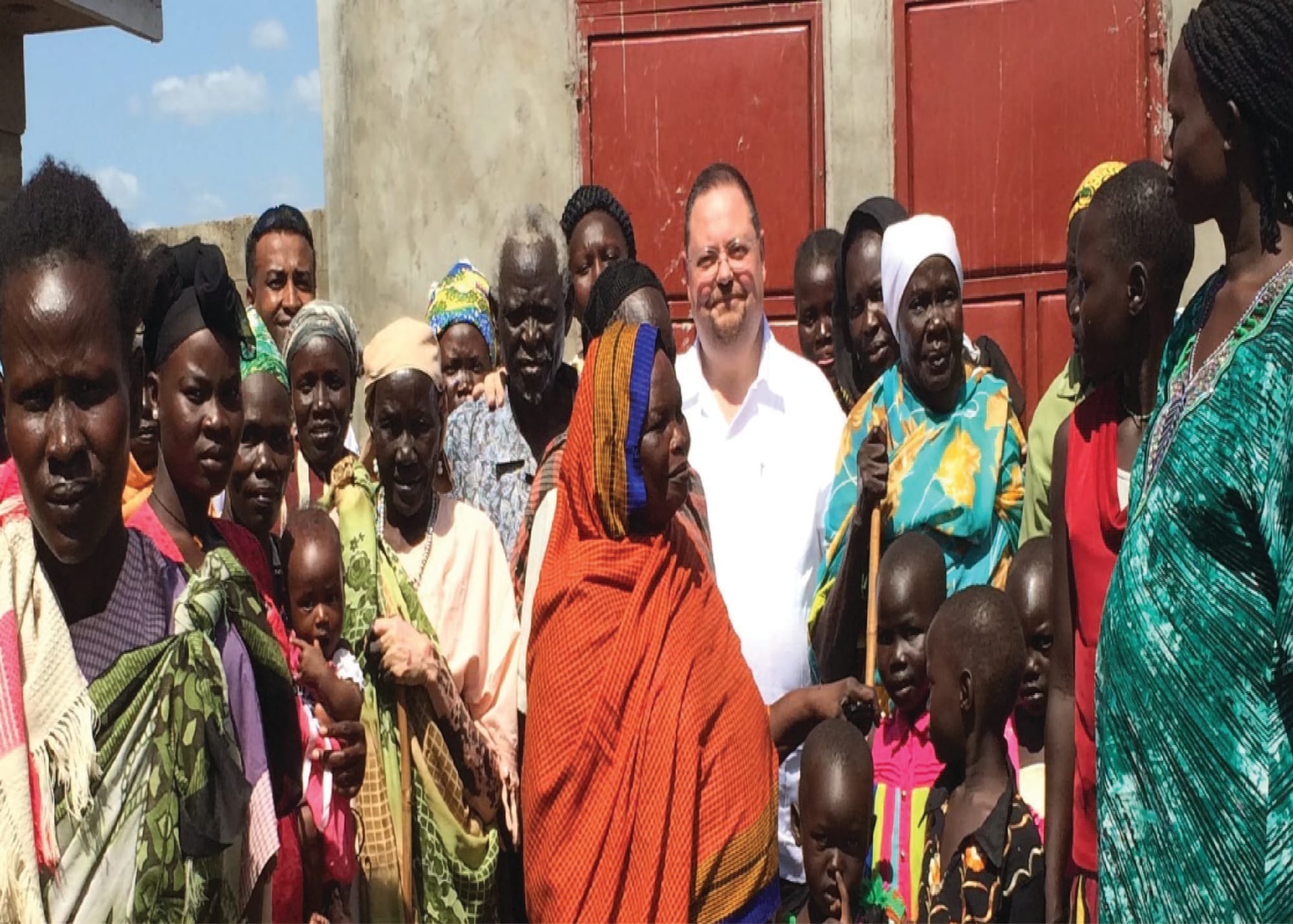
In 2005, he established a missionary school in Elegu, a town in Northern Region of Uganda. It sits across the international border from the town of Nimule, South of Sudan.
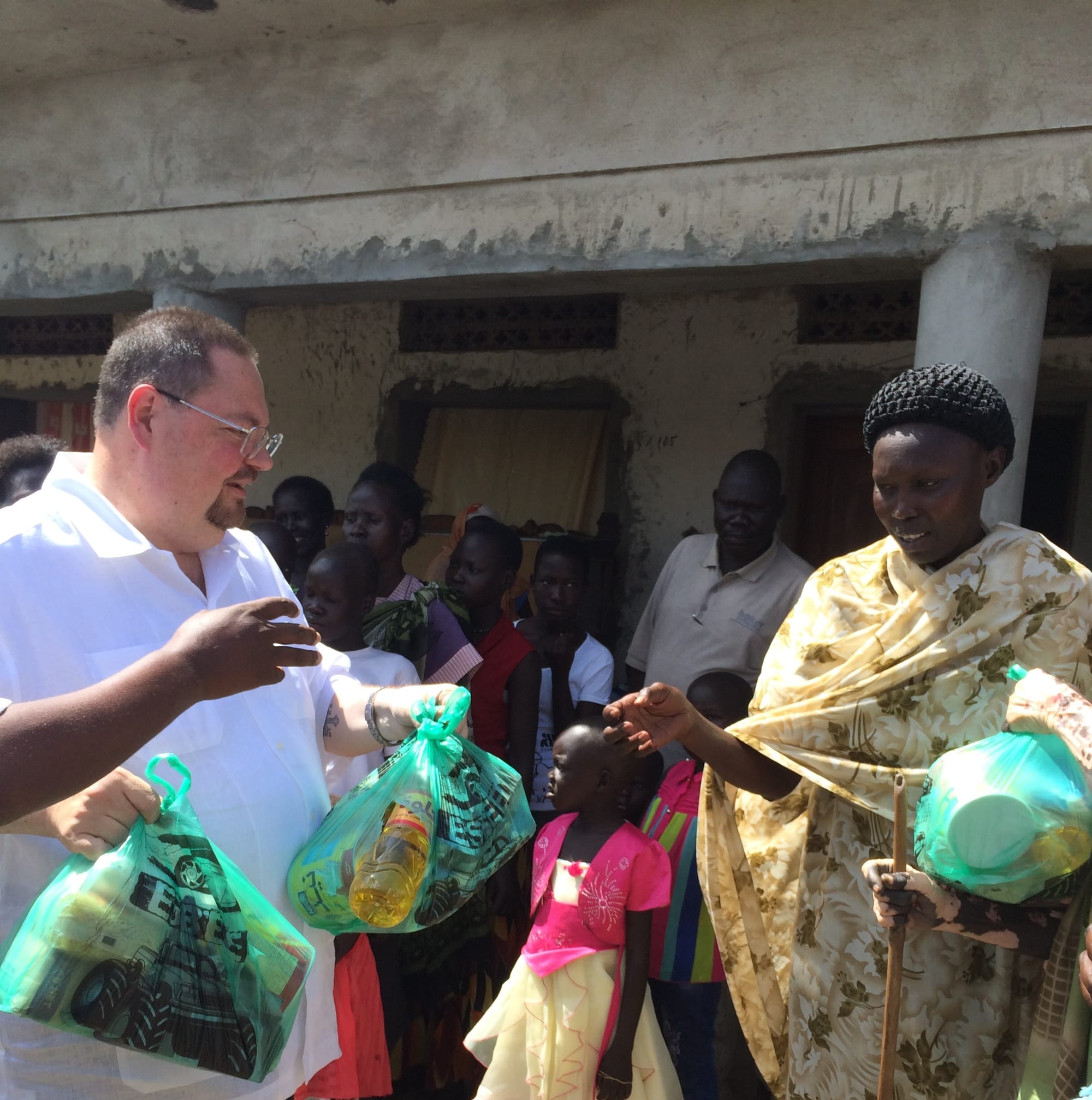
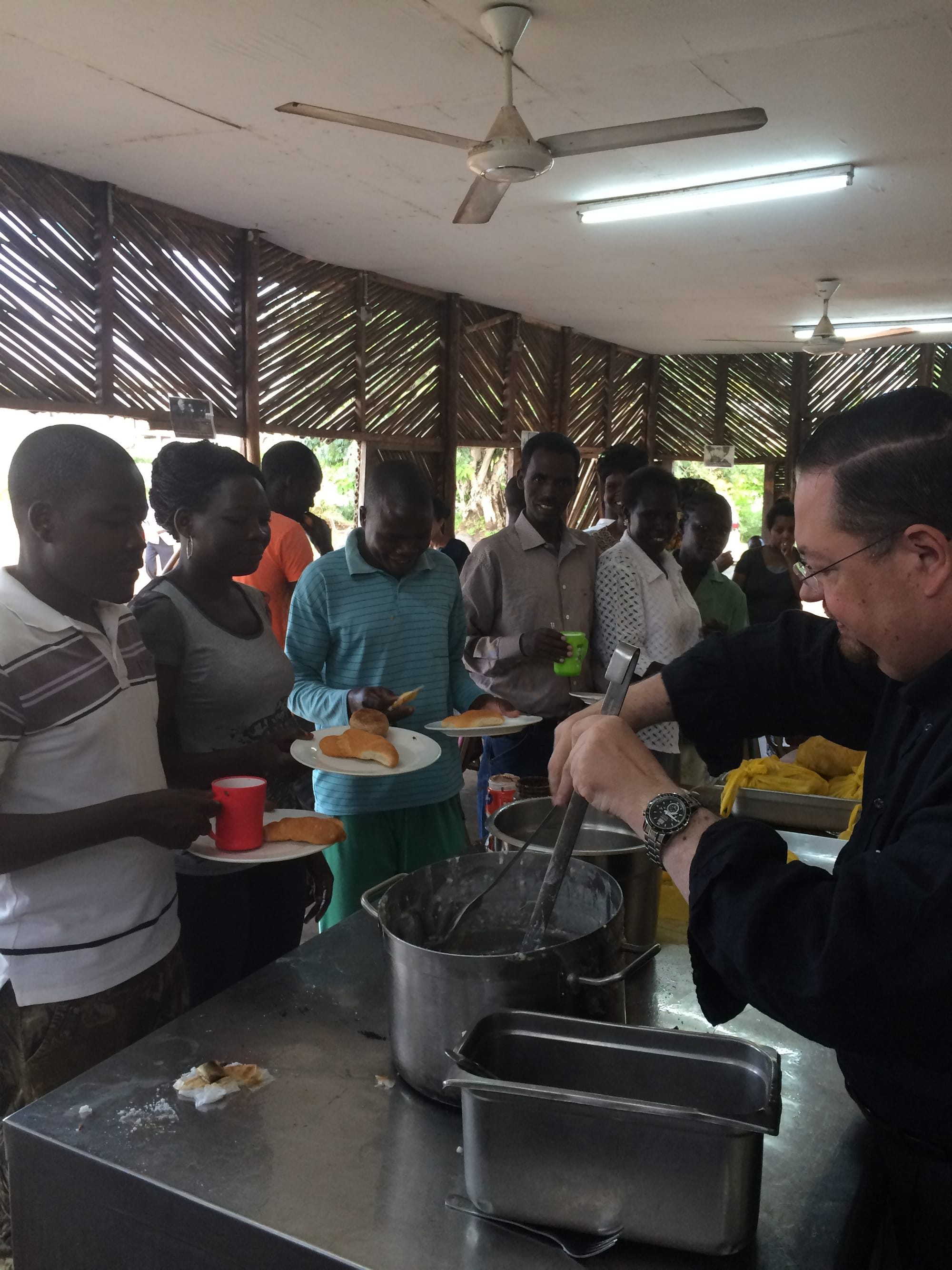
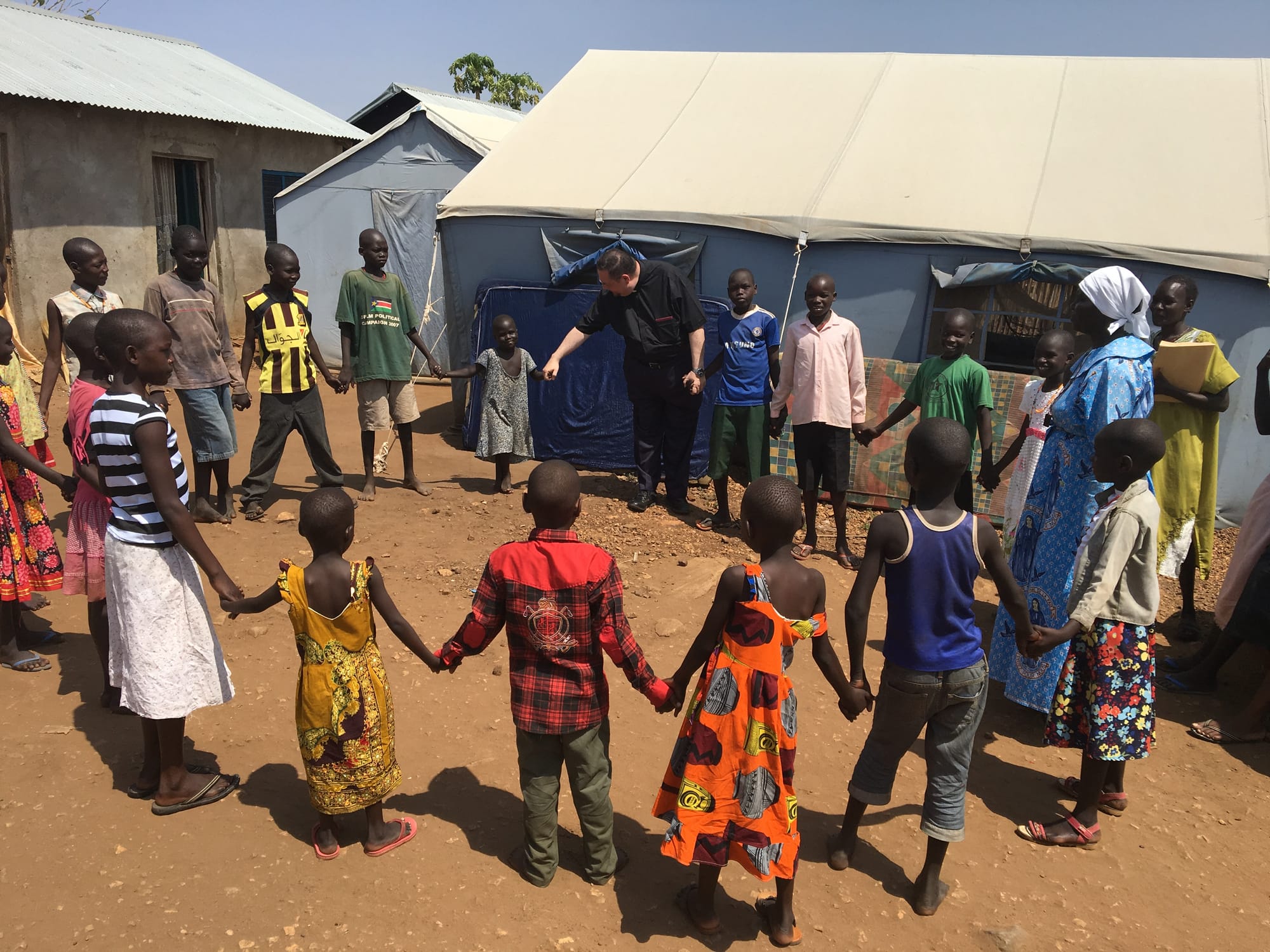
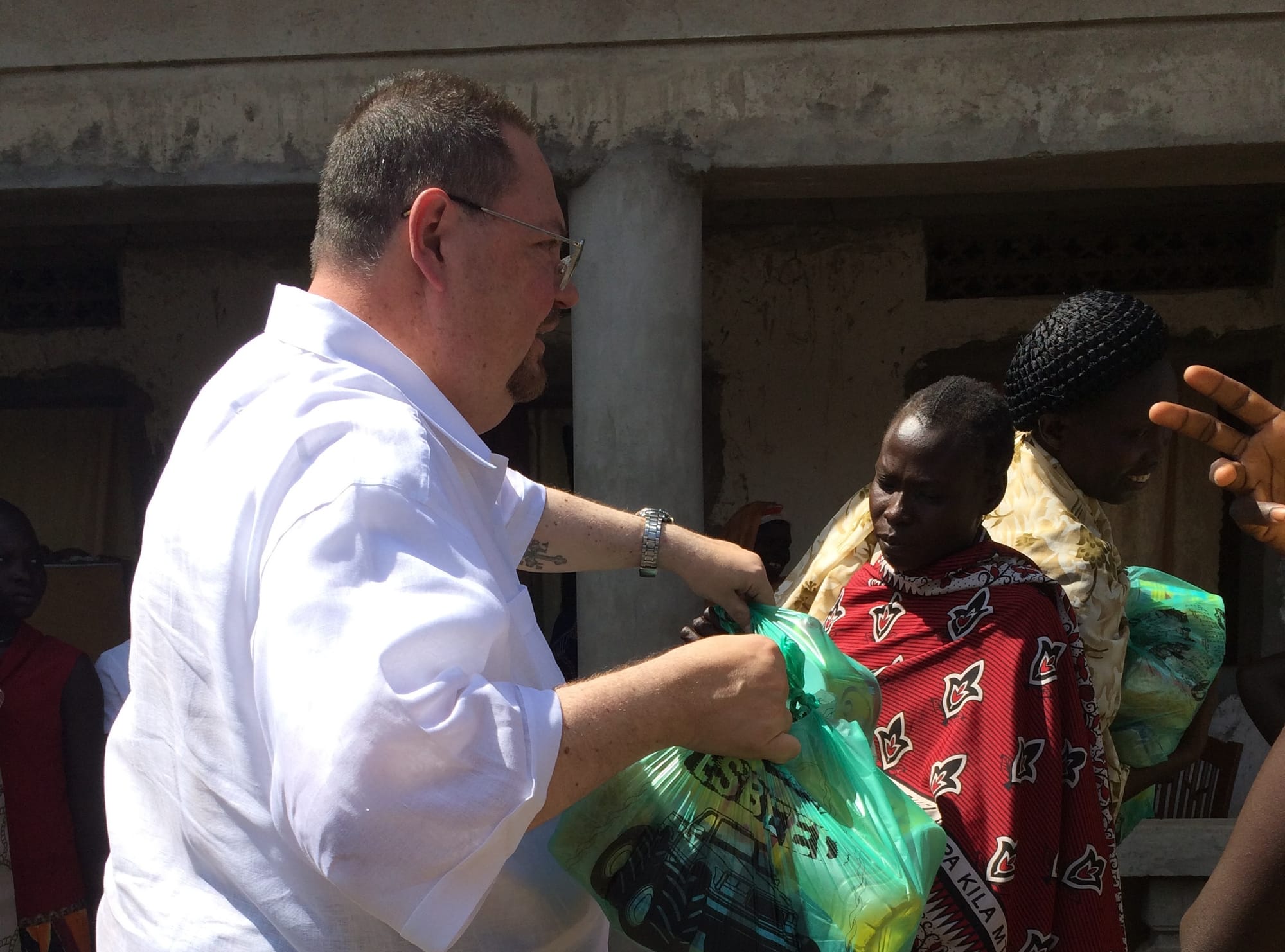
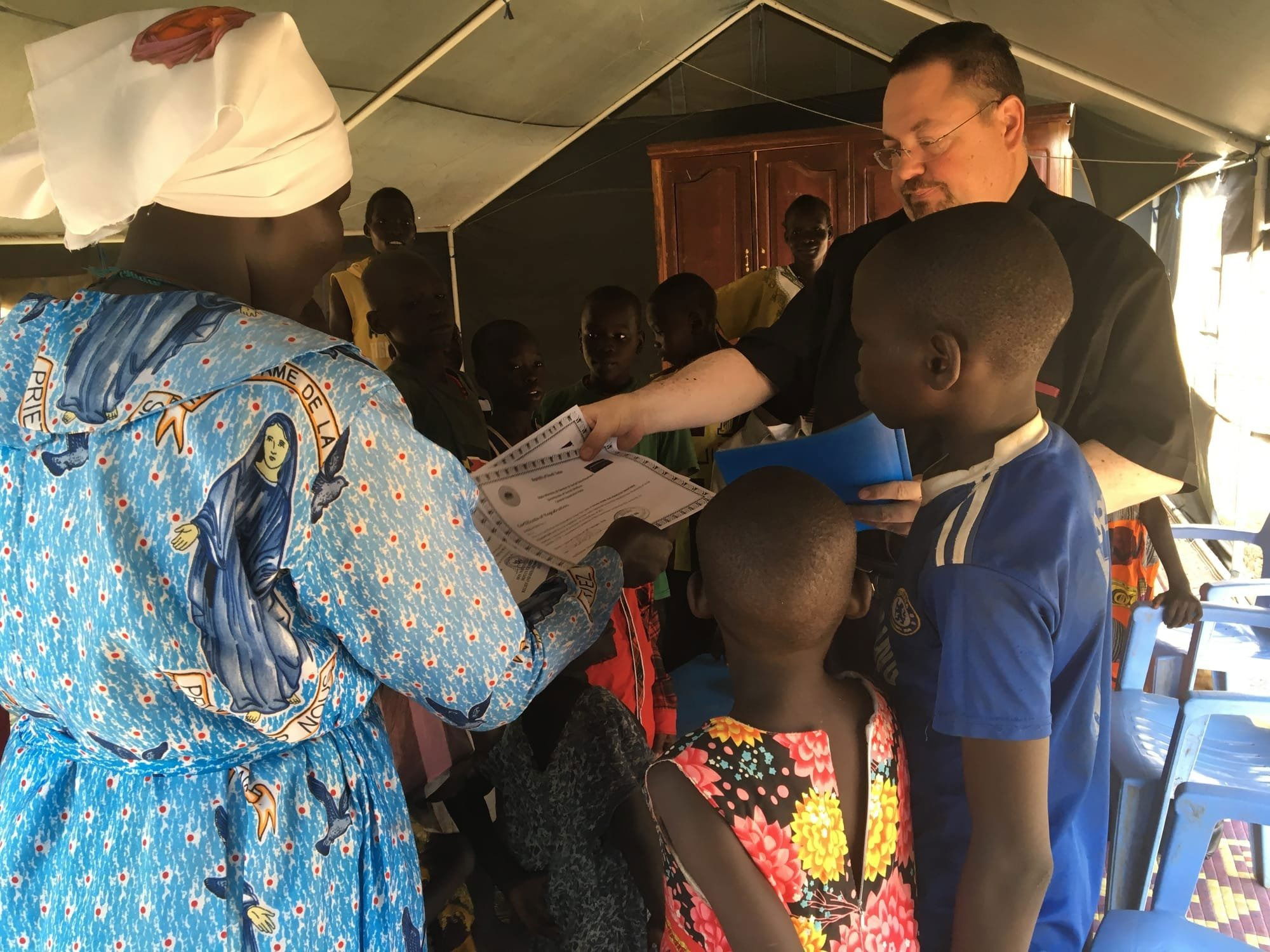
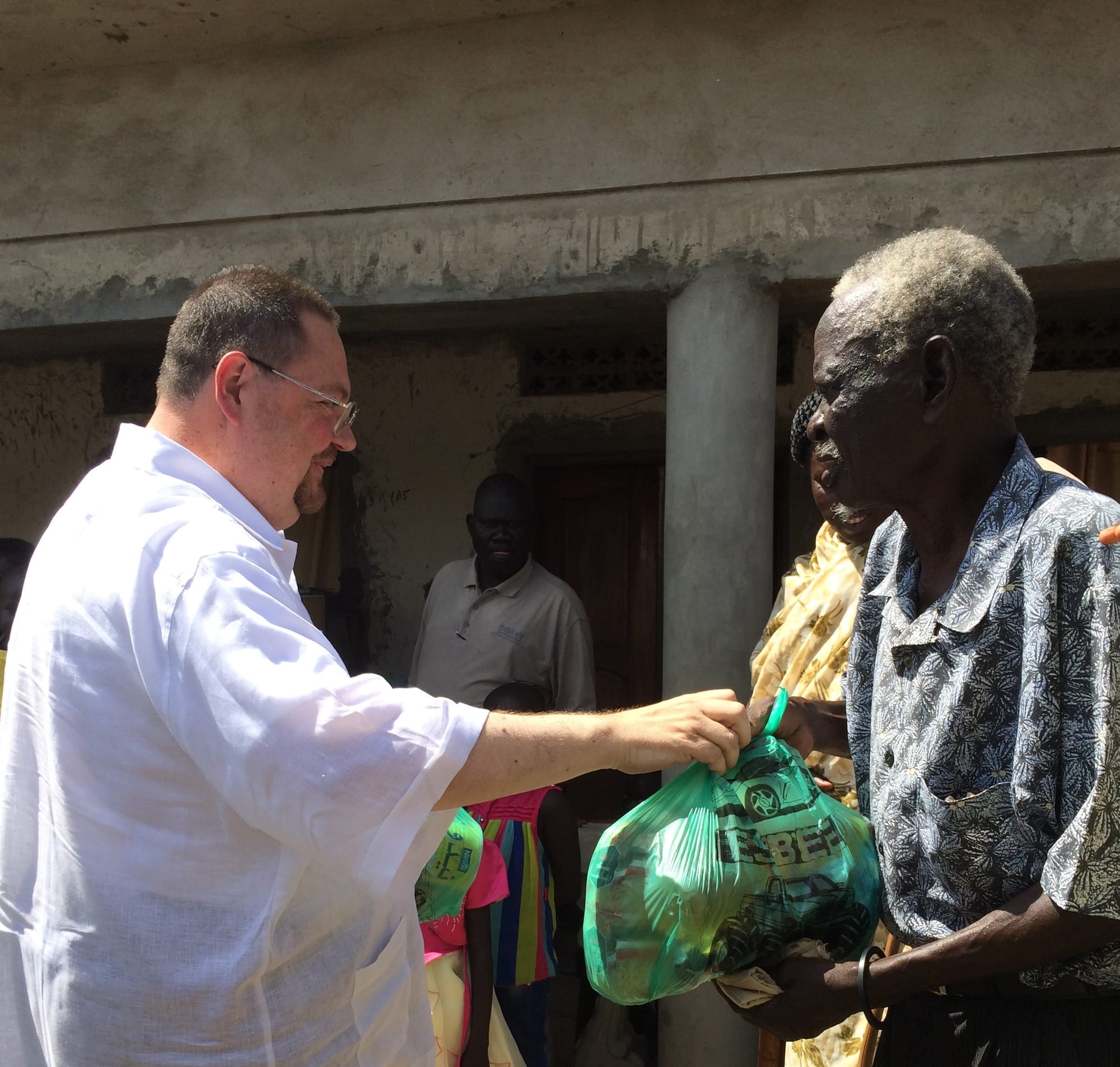
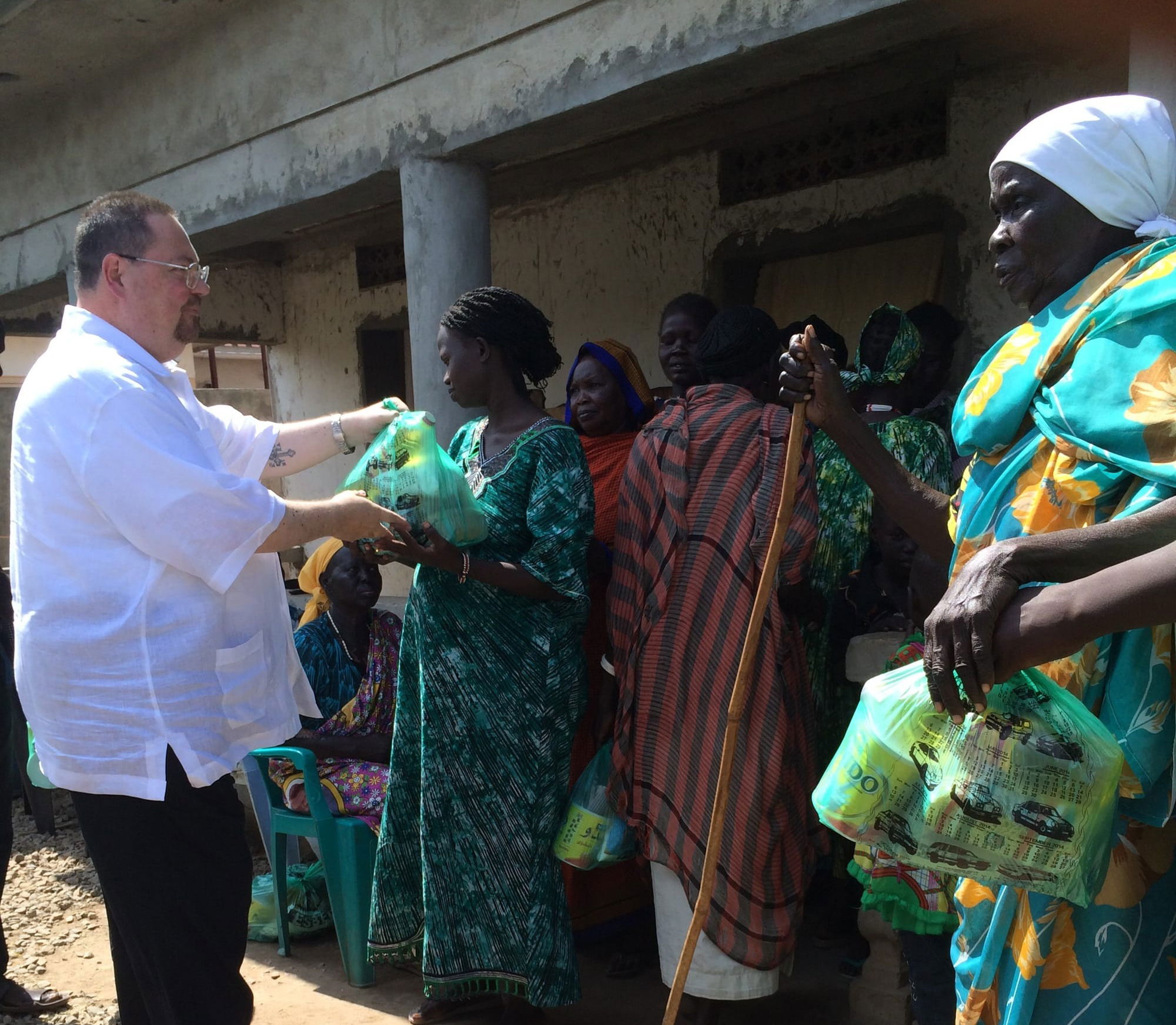
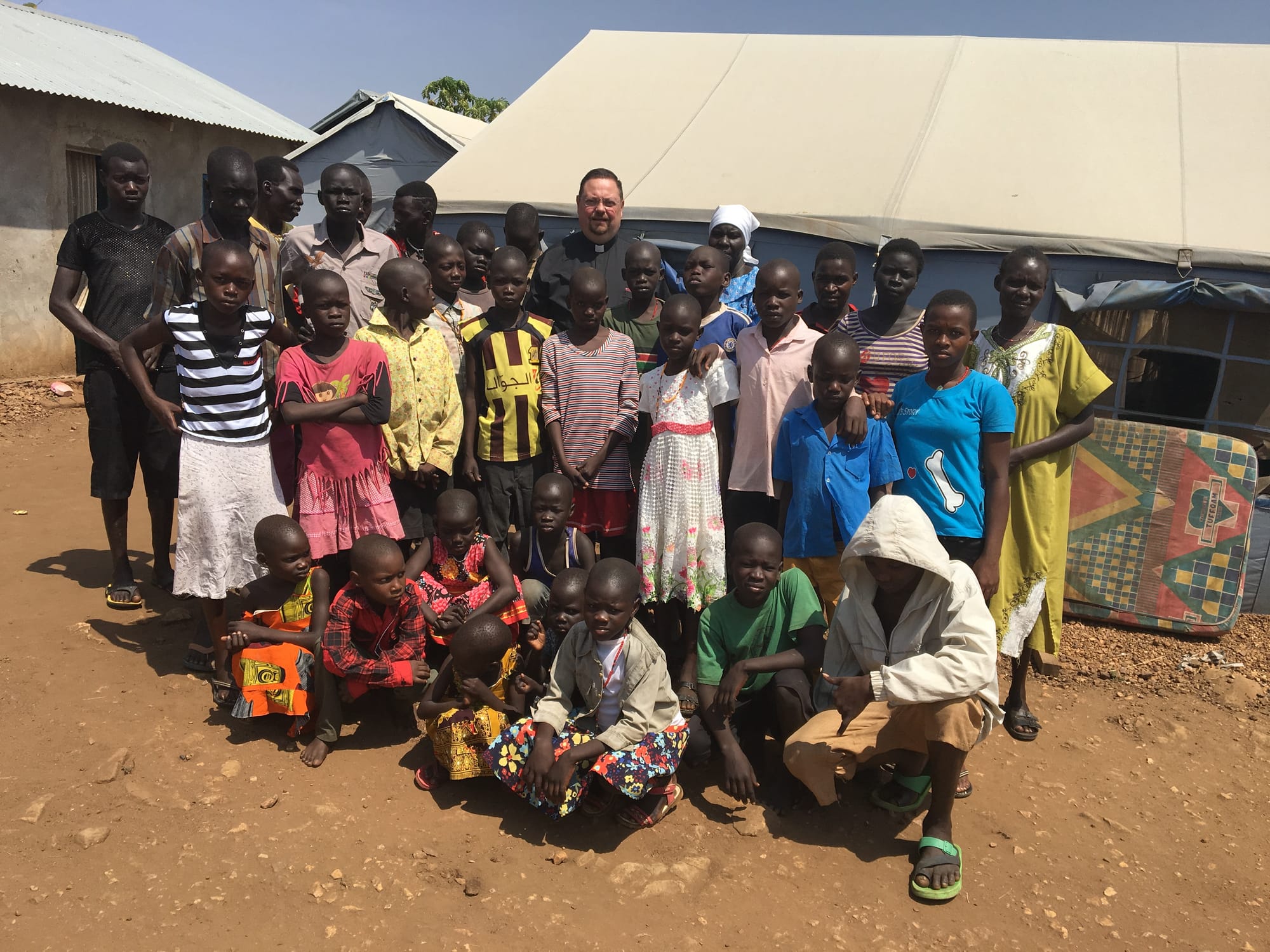
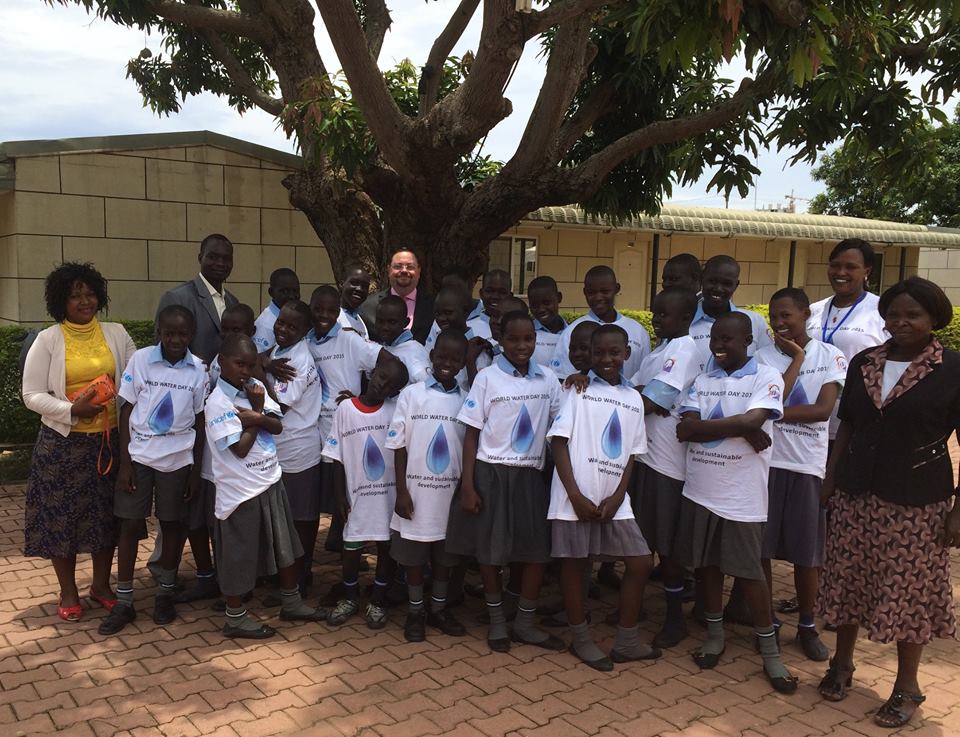
To aid the children who lost their parents during the civil war, he founded in 2014, an Orphanage in Juba, South of Sudan. The Orphanage took care of 52 children and sheltered displaced women. Working in Africa, he had the opportunity to work closely with many International Humanitarian Organizations and was successful in the many projects he was overseeing.
In 2016, after serving many years in Central Equatoria and East Africa where he worked closely with Refugees’ Camps, Orphanages and Field Hospitals, then His Eminence due to political instability, Bishop George left Africa leaving a legacy through his efforts to assimilate with the indigenous Christians and empower them to embrace Christianity as their own. His Eminence moved to the United Kingdom to continue his mission and work in the vineyard of our Lord.
On Sunday April 1st, 2018, he founded the Companions of Christ Christian Fellowship. Its primary objective is to fully promote Christian dialogue in order to achieve unity among Churches, to consolidate efforts and support the initiatives of Christians aimed at its development, to promote the expansion of the Christian faith, to be involved in charitable work, and the defence of Christian traditions, to play a crucial role in preserving and defending the Christian faith and traditions, to engage in charitable work and humanitarian efforts, providing support to those in need, to be engaged with theological studies and discussions. One of its main purposes is to produce innovative, high-quality research and insights into the rich tapestry and complex dynamics of Christian cultures and societies, past and present. This is achieved through a range of research projects, scholarly collaborations, conferences, seminars, workshops, and academic publications.
In October 2021, He was elevated to the rank of Metropolitan Archbishop to serve Great Britain. In 2022, he was awarded by the Sovereign Hospitaller Order of Saint John of Jerusalem, Knights of Malta the Ukrainian Relief Medal of Honour in recognition to his aid and support to the refugees of Ukraine in the UK. In 2026, The Ukraine Grand Priory of the Knights of Malta, Sovereign Hospitaller Order of Saint John of Jerusalem awarded His Eminence the Ukraine Star Medal in recognition to his humanitarian aid.
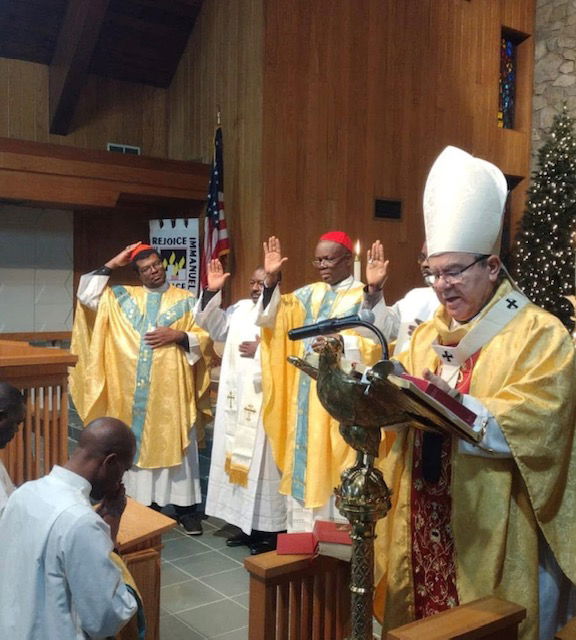
In 2023, Metropolitan Archbishop was received into the Unity Church by His Holiness Pope Jean Pierre I, Primate. His Eminence was elevated to the rank of Cardinal and was assigned Primate of the United Kingdom, Head the Congregation of Eastern Churches for Unity; an institution established by Pope Jean Pierre I, Primate of the Unity Church.
His Eminence is proficient in: English, Arabic, Patristic Greek, Classical Hebrew and Aramaic.


q&a
What is the Unity Church?
The Unity Church is an independent Church combines Catholic, Orthodox, and Protestant faithful. The Unity Church have many followers around the world. Since it is a Unity Church, Catholic, Orthodox and Protestant Priests and Bishops who have an apostolic succession are permitted to celebrate together the Divine Liturgy and to partake in one heart and soul from the from the Holy Eucharist.
Who is the Head of the Unity Church?
Our Lord and Saviour Jesus Christ is the Head of the Church. Christ the Lord has instituted in His Church various ministries which tend to the good of the whole Mystical Body. Jesus Christ, Eternal Shepherd, built up the Holy Church by sending His Apostles (cf. Jn 20:21). The successors of these Apostles are the bishops endowed with apostolic filiation. The Episcopate is one and undivided since the Head of the Church is Her Founder Jesus Christ. His Holiness Pope Jean Pierre I, is the Primate of the Unity Church.
What is your mission?
Whenever the sacrifice of the cross by which Christ our Passover was immolated (cf. 1 Cor 5:7) is celebrated on the altar, the work of our redemption takes place. At the same time, the sacrament of Eucharistic bread represents and brings about the unity of the faithful who, in Christ, form one body (cf. 1 Cor 10:17). Our mission is to eradicate schisms and divisions between the Churches and to call them all to a Eucharistic union with Christ, the light of the world, from whom we proceed, by whom we live and towards whom we tend.
Do you consider yourself a liberal Church?
We consider ourselves neither liberal nor conservative (two modern terms that are irrelevant to the Church mission). Our mission is to bring the good news to all mankind and preach the Gospel of our Lord. We believe the mission of the Church is to embrace and invite all individual to know Christ.
Do you recognise the Pope of Rome?
Yes, we recognise the authority of the Pope, but refuses to be a Roman Catholic Church, we chose to remain at the same distance from all Churches and to ensure that all obstacles between them are removed. The Unity Church has its own Church structure and organization and leaves the freedom to choose liturgical rites to its clergy.
What is your Church structure?
His Holiness Pope Jean Pierre I, is the Primate of the Unity Church. His Holiness He is number 142 of the direct apostolic succession of St. Peter the Apostle. He is the first Bishop in the Unity Church and the guarantor of the unity of the Church and the unity of Christians. The Unity Church consists of all Churches whose Bishops live in partnership with His Holiness the Pope. The Hierarchy of the Unity Church consists of Cardinals, Patriarchs, Metropolitans, Archbishops, Bishops, Priests, and Deacons. Priests and Deacons work under the authority of the local Bishops. The local Synod brings together Bishops from one country and aims to establish strong relations with all the churches scattered throughout the geographical area of this synod. The Pope is a moral and international legal entity whose goal is to unite all Churches and to mediate in some conflicts.
Briefly, how do you describe the Church of Unity?
The Church of Unity is a vibrant community, united by faith in Christ and guided by the desire to respond to His call. We are a place of prayer, sharing, and welcome, open to all who seek a spiritual path. What you say about the heart of your mission? At the heart of our mission lies the desire to live and share the Gospel. The Church of Unity brings together faithful from all walks of life to celebrate, pray, and grow together in faith. Our celebrations are powerful moments of communion where we find renewal in the Word of God. We believe in a fraternal Church, where each person is welcomed with love and respect, just as they are. It is in this spirit of family that we move forward, supporting one another on life's journey.
What govern the Church of Unity?
The Code of Canon Law of the Church of Unity govern the life of our Church. The Code of Canon constitutes the collection of laws and rules that govern the life of our Church. Inspired by the great canonical tradition, it adapts the principles of Church law to our specific reality and mission, guiding the rights and duties of the faithful. Do you have a Constitution? Yes, the Constitution of the Church of Unity, is a fundamental text, sets out our identity, our core beliefs, and the guiding principles of our community. It forms the basis for our entire organization and all our pastoral and charitable activities. This Constitution specifies the functioning of our various bodies, the governance methods, and the procedures that ensure the smooth operation of our communities in Paris, Brussels, and Beirut, in accordance with our Constitution.
How do understand the universality of the Church?
All men are called to be part of the Church, hence the salvific plan of God to gather together His scattered children in unity (cf. Jn 11:52). It is for this purpose that God became Man to take possession of the universe and snatch us from the power of the rebellious angels who, however, believe in Him and tremble (cf. Jas 2:19). The Holy Spirit who is God and who gives life is, for the whole Church, for each and every one of the believers, the principle of their gathering and their unity in the doctrine of the Apostles, and the fraternal communion, in the fraction bread and prayers (cf. Acts 2:42). The people of God cannot be divided as long as they allow themselves to be guided by the Holy Spirit and therefore the need for reconciliation in the Holy Spirit is essential in order to eradicate all the divisions which have struck the Church. All the faithful, in fact, scattered throughout the world, are, in the Holy Spirit, in communion with others. But since the Kingdom of Christ is not of this world (cf. Jn 18:36), the Church remembers that it must act as a unifier with this King to whom the nations have been given as an inheritance (cf. . . Ps 2, 8) and in whose city gifts and presents are brought (cf. Ps 71 [72], 10; Is 60, 4-7; Rev 21, 24).
The members of the People of God are called to share their goods and to each of the Churches the words of the Apostle also apply: "Let each put at the service of others the gift he has received, as befits good dispensers of divine grace which is so diverse” (cf. 1 Pet 4, 10). Thus, to that unity of the People of God which prefigures and promotes universal peace, all Christians are called.
What do you say of Mary – The Theotokos in the Byzantine Tradition?
Mary, Mother of the Word, Mother of the Church of Unity, and first tabernacle of the Incarnation of God who united humanity to divinity.
What do you say about the Apostles?
The twelve disciples/apostles of Jesus were the foundation stones of His church, several even wrote portions of the Bible. As we study these courageous first-century lives, and what discipleship meant in the time of Jesus, we may expect to be aided in developing a Spirit-directed twenty-first-century discipleship as Christ must have meant it to be. Although we remember each of the Twelve Apostles at different times throughout the year, on June 30th we celebrate the Synaxis of the 12 Apostles, a general remembrance for all of them with liturgical services and hymns that honour their contributions to the Church.
What is your Divine Liturgy in the Eastern Tradition?
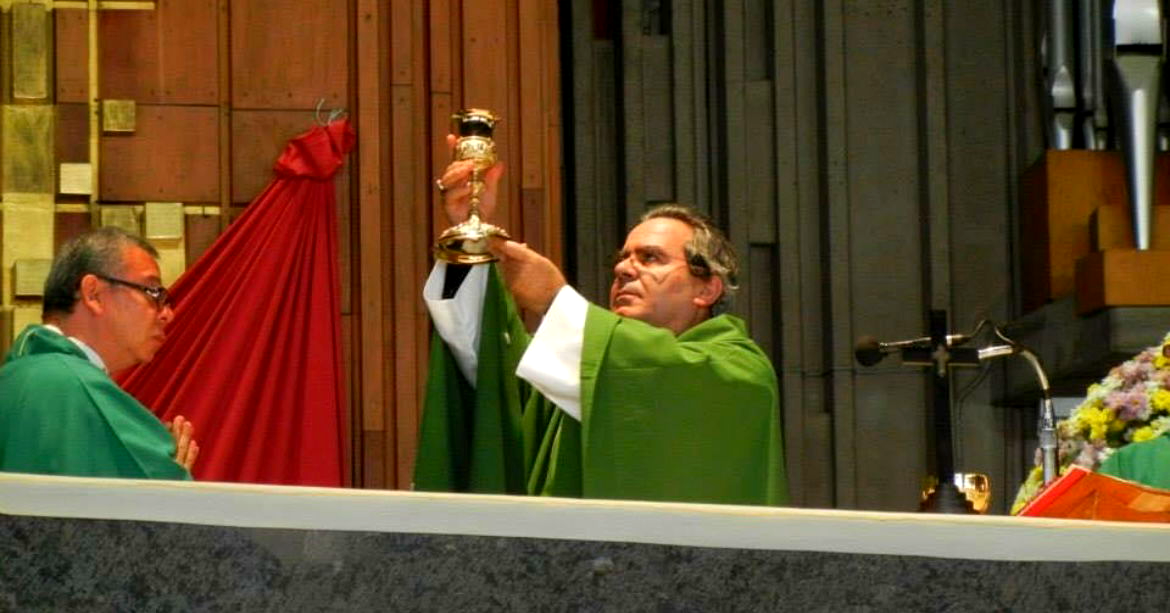
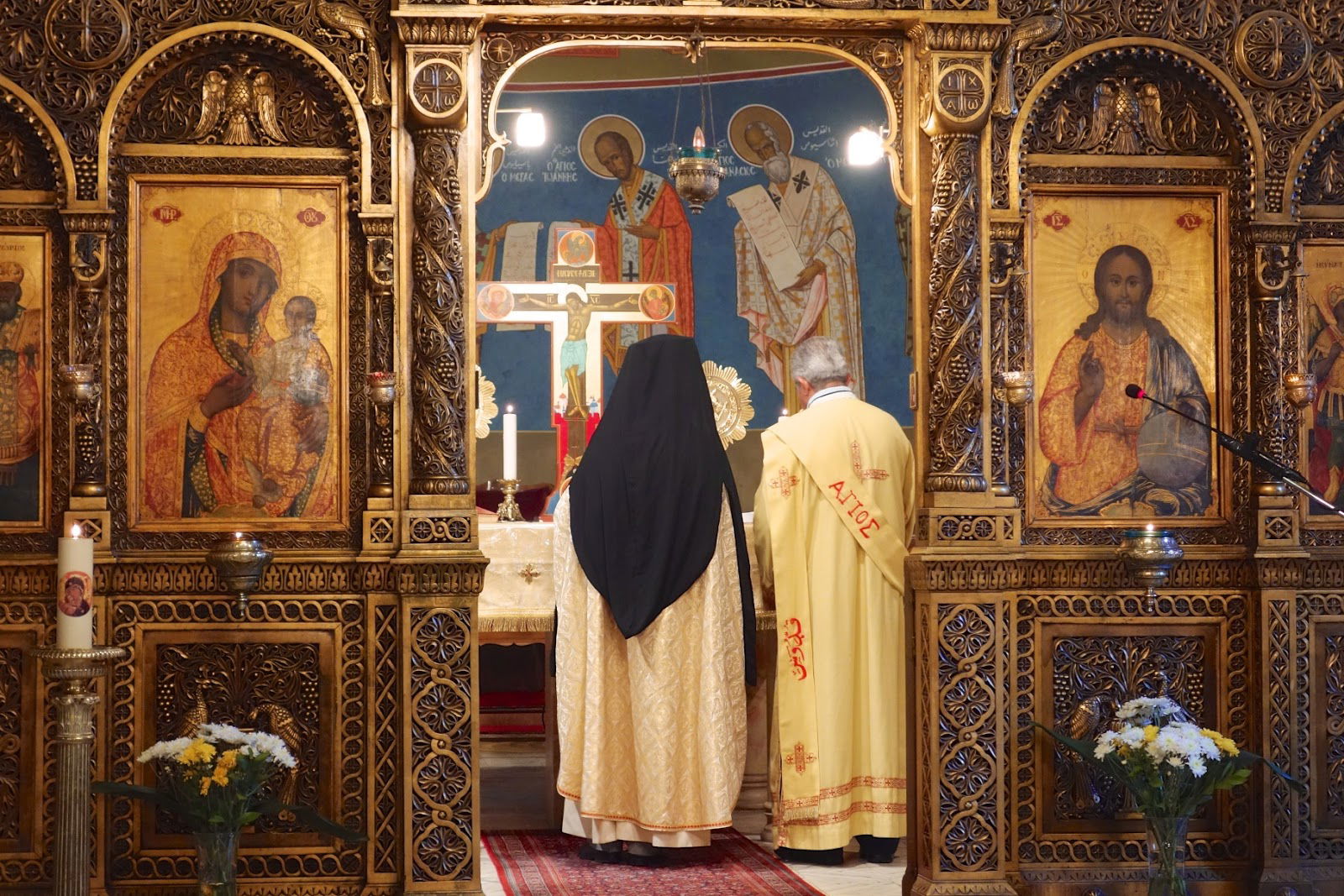
The Divine Liturgy is the central experience of Faith in the Byzantine Eastern tradition. Through it, we participate in the supernatural life, receive inspiration for our spiritual lives, and are catechized in a profound and foundational way. Simply meditating on the prayers of the Divine Liturgy totally immerses one in the mysteries of salvation and the teaching of the Church.
The Liturgy connects the whole Church - Her past, present, and future, uniting us with all the saints and angels, as well as the believers from all times (the Pilgrim Church, Suffering Church, and Glorified Church).
The Divine Liturgy is composed of three main parts: The Prothesis (or proskomedia), the service preparing the holy gifts The Liturgy of the Catechumens, or the Liturgy of the Word The Liturgy of the Faithful, or Liturgy of the Eucharist.
We have three Liturgies that are used throughout the year: The Divine Liturgy of St. John Chrysostom, celebrated on most Sundays throughout the year and most weekdays The Divine Liturgy of St. Basil, celebrated only ten times during the liturgical year, most notably on the first five Sundays of Lent and Christmas Eve The Divine Liturgy of St. Gregory the Dialogist, also known as the Liturgy of the Presanctified Gifts, celebrated during the weekdays of Lent especially on Wednesdays and Fridays.
In the Unity Church any Catholic, Orthodox and Protestant (who have an apostolic succession) may attend Divine Liturgy and receive Holy Communion, and fulfil their Sunday Obligation or Feast Day Obligation.
What is the Liturgical Year?
The Byzantine liturgical year begins on September 1 by recognizing God as the Creator and Sustained of all: O maker of all creation, under whose control are the seasons and the years, being Our Lord, bless the beginning of the year with abundance and, through the intercession of the Mother of God, preserve our Country and the people in peace and save us. The Byzantine liturgical calendar is inherited from the Old Testament and can be divided into three "seasons." The Season of the Nativity is "fixed," meaning that its dates do not change from one year to another. The Seasons of Pascha (Easter) and Pentecost are "moveable," meaning that they vary from year to year depending on the date determined for Easter. Although each Feast Day is an opportunity to enter more fully into the mystery of our salvation, these 12 have particular significance. Three of the Feasts are dependent on the date of Pascha: Palm Sunday, The Ascension of Our Lord Pentecost, The other nine Feasts are part of the "fixed cycle": The Nativity of the Theotokos, The Exaltation of the Holy Cross, The Presentation of the Theotokos, The Nativity of the Lord (Christmas), Theophany of the Lord, The Presentation of the Lord, The Annunciation The Transfiguration, The Dormition, You'll notice that we do not include Pascha in our list of twelve Great Feasts. This is because Pascha is above all feast days.
What do say about the Saints?
The Church Fathers included the commemoration of many Martyrs and other Saints in the liturgical year. The Second Vatican Council reminds us that the Martyrs and Saints, being “raised to holiness by abundant graces of God and already in possession of their eternal salvation, sing constant praises to God in heaven and offer prayers for us” (ct. Decree on the Liturgy, n. 104). By celebrating the passage of the Saints from the earth to heaven, the Church also proposes them to us as so many examples of genuine Christian living.
The veneration of the Saints has a similar purpose. This began in the first century, first the Veneration of the Martyrs and then of the Apostles. Soon other Saints were added.
Between the fourth and the fifth centuries the veneration of the Saints became a general practice, ceding the first place to St. John the Baptist (after the Blessed Mother and the Angels), in view of Christ’s testimony: “There is no one greater than John!” (Lk. 7:28).
The Saints usually are commemorated on the anniversary of their death, since the departure of those “that died in the Lord” (Rom. 14:8) was considered by the Christians as a day of birth to a new and happy life with God.
Icons play a central role in the liturgical and spiritual lives of Byzantine tradition. They adorn the walls and sanctuaries of our Churches and are frequently carried in processions. It is not uncommon for a Byzantine Christian to have an "icon corner" in their home designated for prayer.
Rich theology of icons manifests to us something of the hidden spiritual realities that they represent. Icons are windows into the spiritual world. They help us to look into eternity and they make the historical events of our salvation, as revealed in Scripture, present to us. They are truly "theology in colour."
Through their many symbols, icons allow us to touch the mysteries they represent. They tells us the story of what happened in the events they depict. It is common to hear of someone "writing icons" rather than "painting" them.
We do not worship the icons, we venerate the persons they depict. As a picture of a loved one helps us to keep him or her close to our heart, so too do the icons help in our prayer to be in the presence of God, to feel close to Him, the Mother of God, and all the saints and angels. They help us to know that God, the Theotokos, the saints and angels are always with us.
statement
Christian persecution is a significant global issue affecting over 380 million Christians who experience high levels of persecution and discrimination. This persecution can range from social discrimination and legal restrictions to extreme violence, imprisonment, and death. Scope and Statistics: Global Reach: Approximately 1 in 7 Christians worldwide face persecution. The number of countries where Christians suffer high or extreme levels of persecution has nearly doubled in the last 30 years.
Violence
In 2024, an estimated 4,476 Christians were killed for faith-related reasons, with over 70% of those deaths occurring in Nigeria. Attacks on Property: In the same year, 7,679 churches and Christian properties were attacked globally.
Key Locations of Persecution
According to the Open Doors World Watch List 2025, the most dangerous countries for Christians include:
North Korea
Consistently ranked highest, where simply owning a Bible or attending an unauthorized prayer meeting can be a death sentence or lead to life in a labour camp.
Somalia, Yemen, and Libya
In these Muslim-majority nations, conversion from Islam is illegal, and Christians face severe pressure, discrimination, and violence from both communities and extremist groups like al-Shabaab and the Houthi movement.
Nigeria
The epicentre of violence, where Christian communities face brutal attacks, abductions, and destruction of property by militants and armed bandits.
Pakistan
Christians are often treated as second-class citizens and disproportionately affected by harsh blasphemy laws, which are frequently used to target religious minorities.
Eritrea
An authoritarian government closely monitors recognized churches and imprisons believers who belong to non-official denominations.
The Middle East
Christian persecution in the Middle East is a complex and deeply troubling issue characterized by historical conflict, the rise of extremist groups like the Islamic State (ISIS), and ongoing legal and societal discrimination in many countries. This has led to a steep decline in the Christian population, with the community facing the risk of disappearing from its birthplace.
Key Aspects of the Middle East Persecution
Violence and Genocide
Extremist groups, particularly ISIS, have committed atrocities against Christians and other minorities that have been formally recognized as genocide by the United States, the European Parliament, and the UK Parliament. This included massacres, forced conversions, sexual slavery, and the systematic destruction of churches and historical sites.
Exodus and Demographic Decline
The main impact of persecution is an ongoing exodus of Christians from the region. In Iraq, the Christian population has plummeted from an estimated 1.4 million before the 2003 invasion to around 120,000 to 300,000 today. A similar trend is seen in Syria, where numbers have fallen from 1.5 million to approximately 300,000.
Legal Restrictions and Societal Discrimination
In many Middle Eastern nations, Christians face systemic, non-violent persecution, including: Prohibition of Public Worship: Till date, in some Arabic countries; public Christian worship is strictly illegal, forcing believers to meet in secret house churches.
Restrictions on Conversion
Conversion from Islam to Christianity is often forbidden and can result in severe penalties, including imprisonment or the death penalty in some countries like Yemen and Iran.
Discrimination
Christians often face job and education discrimination and are subject to laws that inhibit church construction or ban the distribution of Bibles in local languages. Christianity in our time is experiencing a significant decline in the Middle East, falling from around 20% of the population a century ago to an estimated 3-5% today, driven by, conflict, persecution, lack of economic opportunity, and emigration. This exodus has devastated historic communities in countries like Iraq, Syria, Lebanon and Palestine, with some ancient communities facing near extinction.
ON FREEDOM
Freedom is one of God’s greatest gifts to the human being. He who created man in the beginning made him free and self-determined, limiting him solely by the laws of the commandment (Gregory the Theologian, Homily 14, On Love for the Poor, 25. PG 35, 892A). Freedom renders the human being capable of progressing toward spiritual perfection; yet it also includes the risk of disobedience as independence from God and consequently the fall, which tragically gives rise to evil in the world.
ON PEACE & JUSTICE
The Church has diachronically recognized and revealed the centrality of peace and justice in people’s lives. The very revelation of Christ is characterized as a gospel of peace (Eph 6:15), for Christ has brought peace to all through the blood of his Cross (Col 1:20), preached peace to those afar and near (Eph 2:17), and has become our peace (Eph 2:14).
This peace, which surpasses all understanding (Phil 4:7), as the Lord Himself told His disciples before His passion, is broader and more essential than the peace promised by the world: peace I leave with you, my peace I give to you; not as the world gives do I give to you (Jn 14:27). This is because the peace of Christ is the ripe fruit of the restoration of all things in Him, the revelation of the human person’s dignity and majesty as an image of God, the manifestation of the organic unity in Christ between humanity and the world, the universality of the principles of peace, freedom, and social justice, and ultimately the blossoming of Christian love among people and nations of the world. The reign of all these Christian principles on earth gives rise to authentic peace. It is the peace from above, for which the Unity Catholic Church prays constantly in its daily petitions, asking this of the almighty God, who hears the prayers of those that draw near to Him in faith.
ON PEACE & THE AVERSION OF WAR
The Church of Christ condemns war in general, recognizing it as the result of the presence of evil and sin in the world: Where do wars and fights come from among you? Do they not come from your desires for pleasure that war in your members? (Jm 4:1). Every war threatens to destroy creation and life. This is most particularly the case with wars with weapons of mass destruction because their consequences would be horrific not only because they lead to the death of an unforeseeable number of people, but also because they render life unbearable for those who survive. They also lead to incurable diseases, cause genetic mutations and other disasters, with catastrophic impact on future generations. The amassing not only of nuclear, chemical, and biological weapons, but of all kinds of weapons, poses very serious dangers inasmuch as they create a false sense of superiority and dominance over the rest of the world. Moreover, such weapons create an atmosphere of fear and mistrust, becoming the impetus for a new arms race.
The Church of Christ, which understands war as essentially the result of evil and sin in the world, supports all initiatives and efforts to prevent or avert it through dialogue and every other viable means. When war becomes inevitable, the Church continues to pray and care in a pastoral manner for her children who are involved in military conflict for the sake of defending their life and freedom, while making every effort to bring about the swift restoration of peace and freedom. The Christian Church resolutely condemns the multifaceted conflicts and wars provoked by fanaticism that derives from religious principles.
There is grave concern over the permanent trend of increasing oppression and persecution of Christians and other communities in the Middle East and elsewhere because of their beliefs; equally troubling are the attempts to uproot Christianity from its traditional homelands. As a result, existing interfaith and international relations are threatened, while many Christians are forced to abandon their homes. Orthodox, Catholic Christians throughout the world suffer with their fellow Christians and all those being persecuted in this region, while also calling for a just and lasting resolution to the region’s problems. Wars inspired by nationalism and leading to ethnic cleansing, the violation of state borders, and the seizure of territory are also condemned.
ON THE ATTITUDE OF THE CHURCH TOWARD DISCRIMINATION
The Lord, as King of righteousness (Heb 7:2-3) denounces violence and injustice (Ps 10:5), while condemning the inhumane treatment of one’s neighbour (Mt 25:41-46; Jm 2:15-16). In His Kingdom, reflected and present in His Church on earth, there is no place for hatred, enmity, or intolerance (Is 11:6; Rom 12:10).
Our position on this is clear. We believes that God has made from one blood every nation of men to dwell on all the face of the earth (Acts 17:26) and that in Christ there is neither Jew nor Greek, there is neither slave nor free, there is neither male nor female: for you are all one in Christ Jesus(Gal 3:28). To the question: Who is my neighbour? Christ responded with the parable of the Good Samaritan (Lk 10:25-37). In so doing, He taught us to tear down all barriers erected by enmity and prejudice.
The Church confesses that every human being, regardless of skin colour, religion, race, sex, ethnicity, and language, is created in the image and likeness of God, and enjoys equal rights in society. Consistent with this belief, we reject discrimination for any of the aforementioned reasons since these presuppose a difference in dignity between people.
The Church, in the spirit of respecting human rights and equal treatment of all, values the application of these principles in the light of her teaching on the sacraments, the family, the role of both genders in the Church, and the overall principles of Church tradition. The Church has the right to proclaim and witness to her teaching in the public sphere.
ON THE MISSION OF THE CHURCH AS A WITNESS OF LOVE THROUGH SERVICE
In fulfilling her mission in the world, the Church actively cares for all people in need, including the hungry, the poor, the sick, the disabled, the elderly, the persecuted, those in captivity and prison, the homeless, the orphans, the victims of destruction and military conflict, those affected by human trafficking and modern forms of slavery.
The Church’s efforts to confront destitution and social injustice are an expression of her faith and the service to the Lord, Who identifies Himself with every person and especially with those in need: Inasmuch as you did it to one of the least of these my brethren, you did it to me (Mt 25:40). This multidimensional social service enables the Church to cooperate with various relevant social institutions. Competition and enmity in the world introduce injustice and inequitable access among individuals and peoples to the resources of divine creation. They deprive millions of people of fundamental goods and lead to the degradation of human person; they incite mass migrations of populations, and they engender ethnic, religious, and social conflicts, which threaten the internal cohesion of communities.
The Church cannot remain indifferent before economic conditions that negatively impact humanity. She insists not only on the need for the economy to be grounded upon ethical principles, but that it must also tangibly serve the needs of human beings in accordance with the teaching of the Apostle Paul: By labouring like this, you must support the weak. And remember the words of the Lord Jesus, that he said, ‘It is more blessed to give than to receive’ (Acts 20:35). Saint Basil the Great writes that each person should make it his duty to help those in need and not satisfy his own needs (Moral Rules, 42. PG 31, 1025A).
The gap between rich and poor is dramatically exacerbated due to the financial crisis, which normally results from the unbridled profiteering by some representatives of financial circles, the concentration of wealth in the hands of the few, and perverted business practices devoid of justice and humanitarian sensitivity, which ultimately do not serve humanity’s true needs. A sustainable economy is that which combines efficiency with justice and social solidarity.
Considering such tragic circumstances, the Church’s great responsibility is perceived in terms of overcoming hunger and all other forms of deprivation in the world. One such phenomenon in our time, whereby nations operate within a globalized economic system, points to the world’s serious identity crisis, for hunger not only threatens the divine gift of life of whole peoples, but also offends the lofty dignity and sacredness of the human person, while simultaneously offending God.
Therefore, if concern over our own sustenance is a material issue, then concern over feeding our neighbour is a spiritual issue (Jm 2:14-18). Consequently, it is the mission of all Churches to exhibit solidarity and administer assistance effectively to those in need. The Holy Church of Christ, in her universal body, embracing in her fold many peoples on earth emphasizes the principle of universal solidarity and supports the closer cooperation of nations and states for the sake of resolving conflicts peacefully.
The Church is concerned about the ever-increasing imposition upon humanity of a consumerist lifestyle, devoid of Christian ethical principles. In this sense, consumerism combined with secular globalization tends to lead to the loss of nations’ spiritual roots, their historical loss of memory, and the forgetfulness of their traditions. Mass media frequently operates under the control of an ideology of liberal globalization and is thus rendered an instrument for disseminating consumerism and immorality. Instances of disrespectful, at times blasphemous, attitudes toward religious values are cause for particular concern, inasmuch as arousing division and conflict in society.
The Church warns her children of the risk of influence on their conscience by the mass media, as well as its use to manipulate rather than bring people and nations together. Even as the Church proceeds to preach and realize her salvific mission for the world, she is all the more frequently confronted by expressions of secularism.
The Church of Christ in the world is called to express once again and to promote the content of her prophetic witness to the world, grounded on the experience of faith and recalling her true mission through the proclamation of the Kingdom of God and the cultivation of a sense of unity among her flock. In this way, she opens up a broad field of opportunity since an essential element of her ecclesiology promotes Eucharistic communion and unity within a shattered world. The yearning for continuous growth in prosperity and an unfettered consumerism inevitably lead to a disproportionate use and depletion of natural resources. Nature, which was created by God and given to humankind to work and preserve (cf. Gen 2:15), endures the consequences of human sin: For the creation was subjected to futility, not willingly, but because of him who subjected it in hope; because the creation itself also will be delivered from the bondage of corruption into the glorious liberty of the children of God. For we know that the whole creation groans and labours with birth pangs together until now (Rom 8:20-22).
The ecological crisis, which is connected to climate change and global warming, makes it incumbent upon the Church to do everything within her spiritual power to protect God’s creation from the consequences of human greed. As the gratification of material needs, greed leads to spiritual impoverishment of the human being and to environmental destruction. We should not forget that the earth’s natural resources are not our property, but the Creator’s: The earth is the Lord’s, and all its fullness, the world, and those who dwell therein (Ps 23:1).
Therefore, the Church emphasizes the protection of God’s creation through the cultivation of human responsibility for our God-given environment and the promotion of the virtues of frugality and self-restraint. We are obliged to remember that not only present, but also future generations have a right to enjoy the natural goods granted to us by the Creator.
For the Church, the ability to explore the world scientifically is a gift from God to humanity. However, along with this positive attitude, the Church simultaneously recognizes the dangers latent in the use of certain scientific achievements. She believes that the scientist is indeed free to conduct research, but that the scientist is also obliged to interrupt this research when it violates basic Christian and humanitarian values. According to St. Paul, All things are lawful for me, but all things are not helpful (I Cor 6:12), and according to St. Gregory the Theologian, he writes, Goodness is not goodness if the means are wrong (1st Theological Oration, 4, PG 36, 16C). This perspective of the Church proves necessary for many reasons in order to establish proper boundaries for freedom and the application of the fruits of science, where in almost all disciplines, but especially in biology, we can expect both new achievements and risks. At the same time, we emphasize the unquestionable sacredness of human life from its conception. Over the last years, we observe an immense development in the biological sciences and in corresponding biotechnologies.
Many of these achievements are considered beneficial for humankind, while others raise ethical dilemmas and still others are deemed unacceptable. The Church believes that the human being is not merely a composition of cells, bones, and organs; nor again is the human person defined solely by biological factors. Man is created in the image of God (Gen 1:27) and reference to humanity must take place with due respect. The recognition of this fundamental principle leads to the conclusion that, both in the process of scientific investigation as well as in the practical application of new discoveries and innovations, we should preserve the absolute right of each individual to be respected and honoured at all stages of life. Moreover, we should respect the will of God as manifested through creation. Research must consider ethical and spiritual principles, as well as Christian precepts.
Indeed, due respect must be rendered to all of God’s creation in regard to both the way humanity treats and science explores it, in accordance to God’s commandment (Gen 2:15). In these times of secularization marked by a spiritual crisis characteristic of contemporary civilization, it is especially necessary to highlight the significance of life’s sacredness. The misunderstanding of freedom as permissiveness leads to an increase in crime, the destruction and defacement of those things held in high regard, as well as the total disrespect of our neighbour's freedom and of the sacredness of life. Eastern & Western Church Tradition, shaped by the experience of Christian truths in practice, is the bearer of spirituality and the ascetic ethos, which must especially be encouraged in our time. The Church’s special pastoral care for young people represents an unceasing and unchanging Christ-centred process of formation. Of course, the pastoral responsibility of the Church also extends to the divinely-granted institution of family, which has always been and must always be founded on the sacred mystery of Christian marriage as a union between man and woman, as reflected in the union of Christ and His Church (Eph 5:32). This is especially vital in light of attempts in certain countries to legalize and in certain Christian communities to justify theologically other forms of human cohabitation that are contrary to Christian tradition and teaching.
The Church hopes for the recapitulation of everything in the Body of Christ, it reminds every person coming into the world, that Christ will return again at His Second Coming judging the living and the dead (1 Pet 4, 5) and that His Kingdom shall have no end (Lk 1:33). In our times, just as throughout history, the prophetic and pastoral voice of the Church, the redeeming word of the Cross and of the Resurrection, appeals to the heart of humankind, calling us, with the Apostle Paul, to embrace and experience whatever things are true, whatever things are noble, whatever things are just, whatever things are pure, whatever things are lovely, whatever things are of good report (Phil 4:8) namely, the sacrificial love of Her Crucified Lord, the only way to a world of peace, justice, freedom, and love among peoples and between nations, whose only and ultimate measure is always the scarified Lord (cf. Rev 5:12) for the life of the world, that is, endless Love of God in the Triune God, of the Father, and of the Son, and of the Holy Spirit, to whom belongs all glory and power unto the ages of ages.
ON SEX TRAFFIKING
The Mariamite Byzantine Fathers as the One Apostolic Catholic Church vehemently condemns sex trafficking and all forms of modern slavery, viewing them as heinous sins and a grave violation of human dignity. We consider every human person to be a living icon in the image of God, making exploitation a direct attack on this sanctity. We classify sex trafficking as a form of modern slavery that violates free will and human integrity.
contact us
WE LOVE TO HEAR FROM YOU